
Introduction
Aging does not just mean getting older. It often means losing muscle.
After your 30s, muscle slowly declines. This is called Sarcopenia. Over time, this can reduce strength, slow metabolism, and increase the risk of falls (National Institute on Aging, 2022).
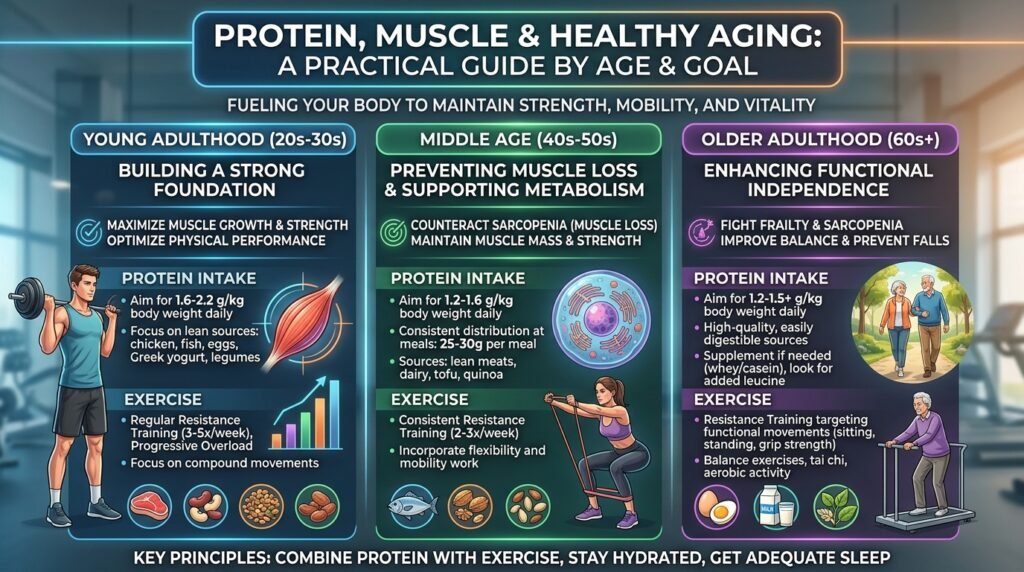
Here is the key point:
You can exercise often, but without enough protein, your body may still lose muscle.
The good news is simple.
With the right protein intake and basic strength training, muscle loss can be slowed or even prevented.
Why Protein Matters
Protein helps your body:
- Build and repair muscle
- Support hormones
- Maintain immune health
- Keep metabolism strong
A key process here is Muscle protein synthesis.
As you age, your body becomes less sensitive to protein. This is called anabolic resistance (Moore et al., 2015).
That means you need more protein to get the same benefit.
How Much Protein Do You Need?
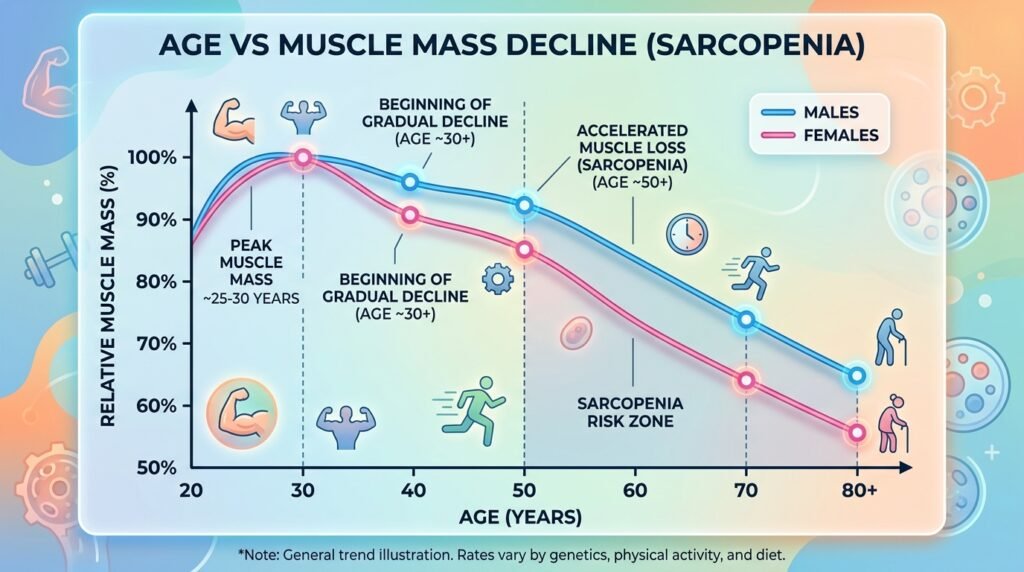
Old guidelines suggested 0.8 grams per kilogram of body weight. That is often too low.
Research from the National Institutes of Health and World Health Organization suggests:
- Sedentary adults: 0.8 g/kg
- Active adults: 1.2–1.6 g/kg
- Adults over 50: 1.2–1.8 g/kg
A review in the The Journal of Nutrition shows that higher protein intake helps maintain muscle and strength with age.
Protein Needs by Age
In Your 20s–30s: Build Strength Early
This is the best time to build muscle.
Focus:
- Build muscle mass
- Improve metabolism
- Create a strong base
Protein Target:
- 1.2–1.6 g/kg
Tips:
- Eat protein at every meal
- Choose foods like eggs, fish, chicken, and beans
- Aim for 20–30 grams per meal
Building muscle now helps protect your health later.
In Your 40s–50s: Maintain What You Built
Muscle loss starts slowly in this stage.
Focus:
- Keep muscle
- Prevent fat gain
- Support hormones
Protein Target:
- 1.4–1.8 g/kg
Tips:
- Add strength training 2–3 times per week
- Eat more protein in the morning
- Include foods rich in leucine (like dairy and whey)
Leucine helps trigger muscle growth (Phillips et al., 2016).
Age 60+: Stay Strong and Independent
Now the goal is to stay mobile and avoid weakness.
Focus:
- Prevent frailty
- Maintain strength
- Reduce fall risk
Protein Target:
- 1.6–2.0 g/kg (if suitable for your health)
According to Harvard Medical School, higher protein intake helps older adults stay strong and active.
Tips:
- Choose easy-to-eat protein (yogurt, eggs, shakes)
- Do light resistance exercises
- Avoid long gaps without protein
Protein by Goal
Goal 1: Build Muscle
- Protein: 1.6–2.2 g/kg
- Combine with strength training
- Eat enough calories
Goal 2: Lose Fat Without Losing Muscle
- Protein: 1.8–2.4 g/kg
- Helps reduce hunger
- Protects muscle during weight loss
Studies show higher protein improves fat loss results (Leidy et al., 2015).
Goal 3: Healthy Aging
- Protein: 1.2–1.6 g/kg
- Combine with regular activity
- Focus on consistency
Best Protein Sources
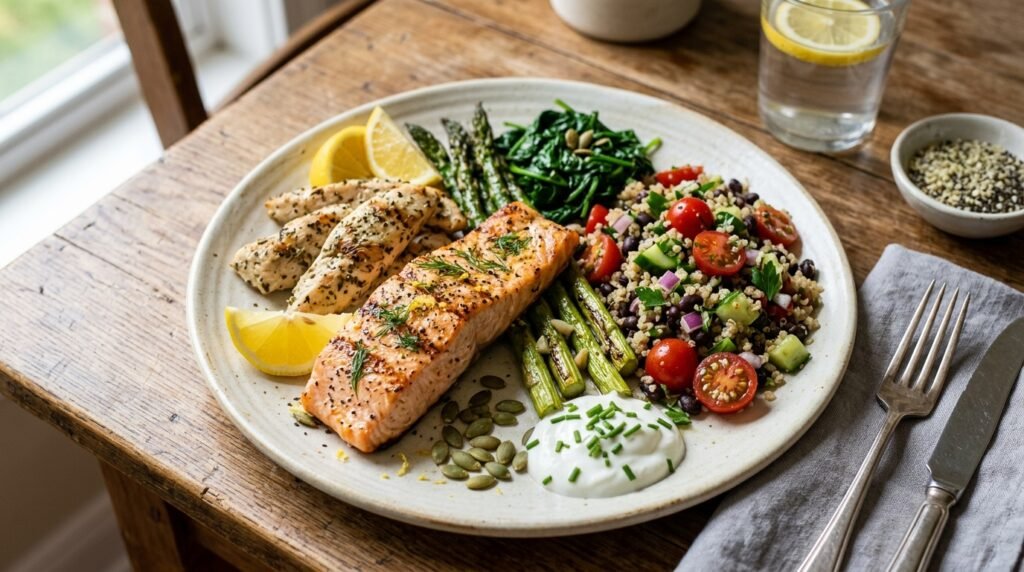
High-Quality Proteins
- Eggs
- Fish
- Chicken
- Dairy
Plant-Based Options
- Lentils
- Chickpeas
- Beans
Combining plant foods helps provide all essential amino acids.
When Should You Eat Protein?
Timing matters.
Instead of eating most protein in one meal, spread it out.
Simple Plan:
- 25–35 grams per meal
- 3–4 meals per day
This helps support Muscle protein synthesis throughout the day.
Common Mistakes
1. Too Little Protein
Many people eat very little protein at breakfast.
2. No Strength Training
Protein alone is not enough. Muscles need resistance.
3. Skipping Meals
Long gaps reduce muscle repair.
4. Too Many Supplements
Whole foods should come first.
Simple Daily Example
Breakfast
Eggs and yogurt (25–30g protein)
Lunch
Chicken or fish with vegetables (30–40g)
Snack
Protein shake or nuts (15–20g)
Dinner
Balanced meal with protein (30–40g)
FAQ
How much protein do I need daily?
Most adults need 1.2–1.6 g/kg. Older adults may need more to maintain muscle.
Can I build muscle after 50?
Yes. Research shows muscle can improve at any age with protein and training.
Is high protein safe?
For healthy people, it is generally safe. People with kidney disease should consult a doctor.
What is the best protein source?
Eggs, fish, and dairy are high-quality sources. Plant proteins also work when combined.
When should I eat protein?
Spread protein across meals for best results.
Conclusion
Aging is not just about years. It is about strength and function.
Protein plays a key role in:
- Keeping muscle
- Supporting metabolism
- Maintaining independence
The plan is simple:
Eat enough protein
Train your muscles
Stay consistent
Do this, and you do not just age
You age stronger and healthier