


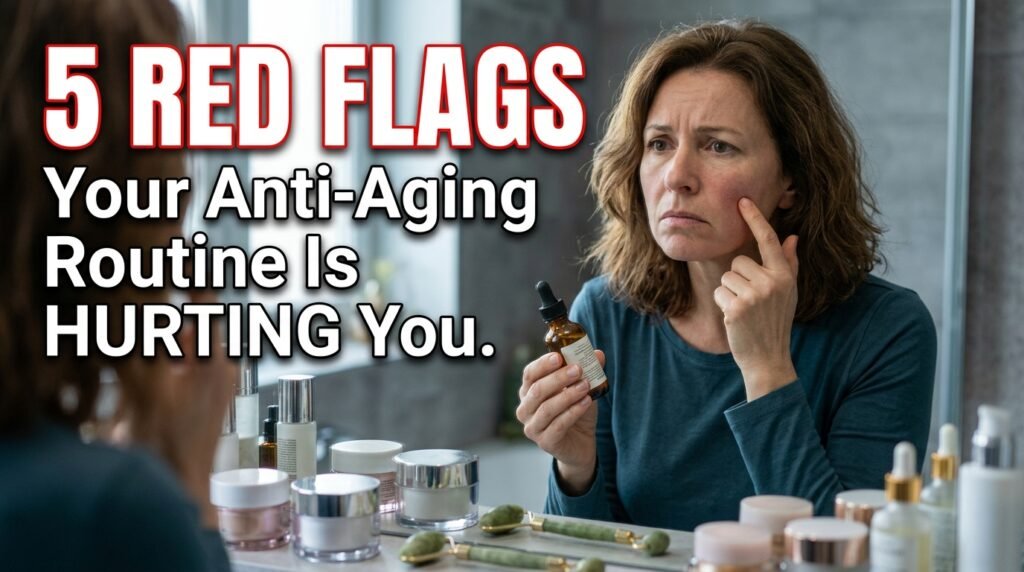
Have you ever wondered if the expensive serums and intense treatments you use daily are actually damaging your complexion? Many people strive for a youthful glow, yet they often fall into traps that strip the skin of its natural vitality.
It is easy to assume that more products equal better results. However, aggressive skincare habits can lead to unintended consequences that accelerate the very issues you hope to fix. Recognizing the 5 red flags your anti aging protocol might be doing more harm than good is essential for maintaining long-term health.
We believe in a balanced approach that prioritizes skin integrity over rapid, temporary fixes. By identifying these warning signs early, you can adjust your routine to support a radiant and resilient complexion.
Key Takeaways
- Over-exfoliation often destroys the protective moisture barrier of the face.
- Using too many active ingredients simultaneously can trigger chronic inflammation.
- Ignoring skin sensitivity leads to long-term redness and uneven texture.
- Consistency with gentle products usually outperforms harsh, quick-fix treatments.
- Professional guidance helps prevent common mistakes in daily beauty routines.
Understanding the Balance Between Rejuvenation and Damage
Achieving a youthful glow requires a delicate balance between stimulating cell turnover and maintaining the structural integrity of your skin. Many enthusiasts fall into the trap of using too many potent products simultaneously, which often leads to common skincare routine mistakes. When you overload your complexion with actives, you risk pushing your skin past its natural threshold for recovery.
By following professional dermatological health tips, you can ensure your anti-aging skincare routine remains effective without compromising your natural protective layers. It is vital to recognize the tipping point where your rejuvenation efforts begin to cause cellular stress rather than improvement. If your skin feels tight, itchy, or constantly inflamed, it is likely signaling that your current regimen is too aggressive.
To maintain a healthy complexion, you must prioritize consistency over intensity. Implementing these dermatological health tips will help you avoid the most frequent skincare routine mistakes that lead to long-term damage. A balanced anti-aging skincare routine focuses on supporting the skin barrier while gently encouraging renewal.
| Habit Type | Recommended Action | Potential Risk |
|---|---|---|
| Exfoliation | Use mild acids 2-3 times weekly | Over-thinning the barrier |
| Active Layering | Introduce one new product at a time | Chemical burns or irritation |
| Hydration | Apply moisturizer on damp skin | Transepidermal water loss |
| Sun Protection | Daily broad-spectrum SPF 30+ | Accelerated photo-aging |
5 red flags your anti aging protocol might be doing more harm than good
Your quest for timeless beauty might be causing hidden harm if you ignore these critical red flags. While many seek rapid results, true anti-aging product safety requires a patient and measured approach. When your skin begins to protest, it is often a sign that your current routine is working against your natural biology.

Adopting healthy aging habits is essential for maintaining a resilient complexion over time. Instead of chasing short-term aesthetic gains, focus on products that support your skin barrier. These dermatological health tips emphasize that less is often more when it comes to potent active ingredients.
If you notice persistent irritation, redness, or unexpected texture changes, it is time to re-evaluate your strategy. Ignoring these symptoms can lead to long-term damage that is much harder to reverse. Prioritizing the integrity of your skin will always yield better results than aggressive, frequent treatments.
| Practice Type | Harmful Approach | Healthy Alternative |
|---|---|---|
| Exfoliation | Daily harsh scrubbing | Gentle chemical exfoliation |
| Ingredient Use | Layering too many actives | Targeted, simple routines |
| Sun Protection | Skipping daily SPF | Consistent broad-spectrum use |
| Goal Setting | Instant transformation | Long-term skin resilience |
By shifting your focus toward sustainability, you protect your skin from unnecessary stress. Remember that consistency is the secret to lasting radiance. Always listen to your skin, as it is the best indicator of whether your current protocol is truly serving your needs.
Persistent Skin Barrier Compromise
If your face feels tight or stings after washing, you might be dealing with a compromised moisture barrier. This protective outer layer is essential for keeping hydration in and irritants out. When it becomes damaged, your complexion loses its natural ability to defend itself against environmental stressors.
Many people fall into common skincare routine mistakes by trying to do too much, too soon. Instead of achieving a radiant glow, they end up stripping away the very lipids that keep skin supple and healthy. Prioritizing skin barrier repair is the most important step to restoring your natural balance.


Signs of a Damaged Moisture Barrier
Recognizing when your skin is struggling is the first step toward recovery. A damaged barrier often sends clear signals that it needs a break from active ingredients. You might notice these common symptoms:
- Persistent tightness, especially after cleansing.
- Unexplained stinging or burning when applying gentle products.
- Visible flaking or rough, uneven texture.
- Increased redness that does not seem to fade.
If you notice these signs of over-exfoliation, it is time to simplify your regimen. Focus on gentle, fragrance-free cleansers and moisturizers that contain ceramides or fatty acids. Giving your skin time to heal is far more effective than adding more products to the mix.
The Dangers of Over-Exfoliation
Over-exfoliation happens when you use high-strength acids or scrubs more frequently than your skin can handle. While chemical exfoliants are great for cell turnover, they can easily disrupt your protective layer if misused. These chemical exfoliant side effects often include extreme sensitivity and a compromised lipid barrier.
To avoid these issues, always start slowly and listen to your skin. If you experience chemical exfoliant side effects like raw patches or persistent irritation, stop all actives immediately. Remember, the goal is to support your skin’s health, not to force it into submission through harsh treatments.
Unexplained Inflammation and Chronic Redness
Unexplained inflammation is frequently the body’s way of signaling that your skin barrier is under extreme stress. When your complexion remains constantly inflamed, it is time to re-evaluate the active ingredients you apply daily. Chronic redness serves as a clear indicator that your skin is struggling to cope with your current product lineup.

Identifying Reactive Skin Patterns
Recognizing the early signs of distress is essential for effective skin barrier repair. You might notice that your face feels tight, stings upon application of basic moisturizers, or develops patches of heat that do not subside. These skin sensitivity symptoms often appear when the protective lipid layer becomes compromised.
If you observe these patterns, your skin is likely in a state of constant duress. It is important to pause your current routine to allow the surface to heal. Focusing on gentle, fragrance-free products can help address the underlying skin inflammation causes before they lead to long-term damage.
When Active Ingredients Clash
Many enthusiasts inadvertently trigger irritation by layering incompatible products. For example, combining high-dose retinoids with potent Vitamin C serums can overwhelm your skin’s natural defenses. This common mistake often leads to severe chemical exfoliant side effects that leave the complexion raw and vulnerable.
Understanding how different actives interact is vital for maintaining a healthy glow. When you introduce too many powerful agents at once, you risk disrupting the delicate balance of your microbiome. Prioritizing skin barrier repair over aggressive treatment is the best way to manage skin sensitivity symptoms and restore a calm, balanced complexion.
Always monitor how your skin reacts to new additions in your regimen. If you notice persistent redness, it is a sign that your skin inflammation causes may be linked to product layering. Being mindful of these chemical exfoliant side effects will help you achieve your goals without sacrificing your skin’s health.
Increased Sensitivity to Sunlight
Achieving a youthful glow often involves powerful ingredients that leave your skin vulnerable to UV rays. While these treatments work to turn back the clock, they can inadvertently alter your skin’s natural defense mechanisms. Recognizing these changes early is essential for maintaining long-term health.

The Role of Photosensitizing Agents
Many popular anti-aging products, such as retinoids and alpha-hydroxy acids, act as photosensitizing agents. These compounds work by accelerating cell turnover, which thins the outermost layer of the epidermis. Consequently, your skin becomes significantly more reactive to environmental stressors.
You might notice unexpected skin sensitivity symptoms, such as a stinging sensation or rapid flushing when you step outside. This is a clear sign that your current protocol is increasing your vulnerability to UV radiation. Understanding these triggers is the first step in managing potential skin inflammation causes effectively.
Why Sun Protection is Non-Negotiable
Because your skin is in a heightened state of repair, the importance of daily defense cannot be overstated. UV exposure remains the primary driver of premature aging and cellular damage. If you skip your SPF, you are essentially undoing the progress you have worked so hard to achieve.
Consistent, high-SPF usage is non-negotiable when you are actively treating your skin. By prioritizing sun protection importance, you create a shield that allows your active ingredients to work without causing unnecessary harm. Remember that consistent application is the most effective way to prevent further skin inflammation causes and keep your complexion resilient.
Accelerated Breakouts and Texture Changes
Navigating the fine line between skin transformation and a negative reaction requires a keen eye. When you introduce potent formulas into your routine, it is common to experience a period of adjustment. However, knowing whether your skin is simply clearing out or suffering from a reaction is essential for anti-aging product safety.
Distinguishing Purging from Irritation
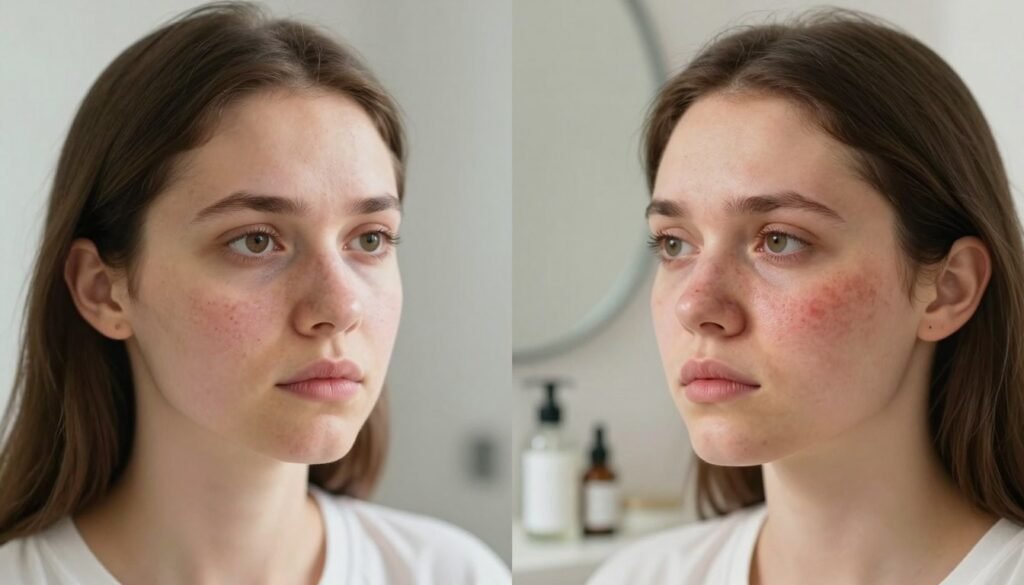
The debate regarding skincare purging vs breakout often leaves users feeling confused. Purging occurs when active ingredients speed up cell turnover, bringing underlying congestion to the surface. This usually happens in areas where you typically break out and resolves relatively quickly.
In contrast, irritation often presents as red, itchy, or burning patches in areas where you do not usually experience issues. If you notice these symptoms, you may be seeing signs of over-exfoliation rather than a productive cycle. Consider these factors to help you decide your next move:
- Location: Purging stays in your usual breakout zones, while irritation can appear anywhere.
- Duration: Purging should subside within four to six weeks; irritation persists as long as the product is used.
- Sensation: Irritation often feels hot or tight, whereas purging typically does not cause significant discomfort.
The Impact of Comedogenic Ingredients
Sometimes, the culprit behind poor results is not the active ingredient itself, but the base formula. Certain oils and waxes can be comedogenic, meaning they clog pores and prevent skin texture improvement. If your skin feels bumpy or congested despite using high-quality actives, you might be dealing with a product that simply does not agree with your specific skin type.
Monitoring your active ingredient interaction is a smart way to maintain a healthy barrier. If you suspect a product is causing congestion, try simplifying your routine to identify the specific irritant. Always remember that your skin’s health is a marathon, not a sprint, and listening to its feedback is the most effective way to achieve a smooth, youthful complexion.
Systemic Side Effects from Internal Supplements
Internal health serves as the foundation of your complexion, yet many people overlook the systemic side effects of popular anti-aging supplements. While you focus on skin texture improvement, it is vital to consider how these additions affect your overall well-being. A truly holistic approach ensures that your pursuit of beauty does not compromise your internal health.
Monitoring Your Body’s Internal Response
When you introduce new vitamins or collagen boosters, your body may react in unexpected ways. It is essential to track these changes carefully to distinguish between a positive adjustment and a negative systemic reaction. Sometimes, what you perceive as a skin issue might actually be a sign that your body is struggling to process a new supplement.
You must learn to differentiate between skincare purging vs breakout patterns caused by topical products versus those triggered by internal changes. If you notice sudden rashes, digestive discomfort, or unusual fatigue, stop the supplement immediately. Keeping a journal of your intake and physical symptoms helps you identify patterns that could indicate a deeper issue.
Consulting Professionals Before Supplementing
Before adding any new pill or powder to your daily routine, seek professional skincare advice. A dermatologist or nutritionist can evaluate your specific health profile to ensure that your choices align with your long-term goals. This step is crucial for maintaining healthy aging habits without risking your safety.
Professionals can also help you understand if a supplement might increase photosensitivity in skincare, which could make your skin more vulnerable to UV damage. Relying on expert guidance prevents the guesswork that often leads to harmful results. Your health is far too important to leave to chance or internet trends.
| Symptom Type | Topical Cause | Internal Cause | Recommended Action |
|---|---|---|---|
| Redness | Over-exfoliation | Allergic reaction | Consult a doctor |
| Breakouts | Comedogenic oils | Hormonal imbalance | Review supplement list |
| Sensitivity | Acid usage | Photosensitizing agents | Increase sun protection |
Conclusion
True beauty stems from a healthy foundation rather than aggressive treatments. You deserve a routine that supports your skin instead of breaking it down over time.
Prioritizing sun protection importance remains the most effective way to maintain a youthful glow. Consistent UV damage prevention stops premature aging before it starts. You should view your daily SPF as your best defense against environmental stressors.
Check your current products against a reliable comedogenic ingredients list to avoid hidden pore-clogging agents. Small adjustments to your routine often yield the best results for your complexion. Seek professional skincare advice if you notice persistent irritation or unusual reactions.
Your skin reflects your overall wellness and daily habits. Listen to what your face tells you during each application. A gentle, informed approach ensures your glow lasts for years to come.