

How to Lower Your Biological Age Naturally: A Complete Guide to Feeling and Living Younger

I turned 43 last year, and something shifted. Not dramatically, not overnight, but I started noticing the gap between how old I was on paper and how old I actually felt. That gap has a name: biological age. Understanding your biological age and learning how to actively reduce it is, in my experience, one of the most empowering things you can do for your health after 40. The research backs this up, and the habits that move the needle are more accessible than most people think.
Table of Contents
- What Is Biological Age and Why Does It Matter?
- How to Test Your Biological Age
- The Role of the Epigenetic Clock in Aging
- Sleep: The Most Underrated Anti-Aging Tool
- Why Protein After 40 Is Non-Negotiable
- Building and Keeping Muscle After 40
- Walking and Longevity: The Simple Habit That Changes Everything
- VO2 Max: The Number That Predicts How Long You’ll Live
- Zone 2 Cardio: The Sweet Spot for Metabolic Health
- Belly Fat, Cortisol, and Why Stress Makes You Age Faster
- Intermittent Fasting and Aging: What the Research Says
- Ultra-Processed Food and Its Impact on Your Biological Age
- Anti-Aging Foods to Add to Your Plate Right Now
- GLP-1 Hormones, Creatine, and Magnesium: The Longevity Supplements
- Morning Routine Habits That Support Longevity
- Your Action Plan to Lower Your Biological Age
1. What Is Biological Age and Why Does It Matter?

Your biological age is not the number of candles on your birthday cake. It is a measure of how old your body actually is on the inside — based on the condition of your cells, tissues, organs, and systems. Two people can both be 50 years old, but one might have the body of a 40-year-old while the other has the body of a 65-year-old. That difference comes down to lifestyle, habits, environment, and yes, a bit of genetics.
The good news is that biology is not destiny. Research in the field of epigenetics — which studies how your habits and environment influence your gene expression — shows that you have enormous control over how fast or how slowly your body ages. Scientists now believe that lifestyle choices account for roughly 80% of how we age, leaving only about 20% to genetics.
Understanding your biological age matters because it gives you a real, measurable target to work toward. It is not about chasing youth or trying to look younger in photographs. It is about maintaining energy, strength, mental sharpness, and physical function for as long as possible so that your later years are genuinely good ones.
If you are wondering how to lower your biological age naturally, you are in the right place. Everything in this guide is practical, evidence-based, and doable — no extreme diets, no expensive procedures, no impossible fitness routines required.
2. Before you can work on lowering your biological age, it helps to know where you are starting from. A biological age test gives you a baseline so you can track your progress over time.
Popular Ways to Test Your Biological Age
- Epigenetic testing (DNA methylation tests): These are the most scientifically advanced options. Companies like TruDiagnostic and Elysium Health offer home test kits that analyse your DNA methylation patterns to estimate your biological age. These tests are based on the work of scientists like Dr. Steve Horvath, who developed what is known as the “epigenetic clock.”
- Grip strength tests: Studies consistently show that grip strength is a reliable predictor of overall biological age and mortality risk. You can test this at a physiotherapist’s office or with a hand dynamometer.
- VO2 max tests: Your cardiovascular fitness level is one of the strongest predictors of how old your body is functioning. More on this below.
- Blood biomarker panels: Tests measuring fasting glucose, insulin, HbA1c, triglycerides, HDL cholesterol, CRP (inflammation marker), and homocysteine can collectively give you a strong picture of your metabolic health and how fast you are aging.
- Free online tools: Platforms like RealAge by Sharecare use lifestyle questionnaires to estimate your biological age. While less precise than lab tests, they are a useful starting point.
Taking a biological age test is not about frightening yourself. Think of it as useful data that tells you exactly where your energy and effort will have the most impact.

3. The Role of the Epigenetic Clock in Aging
The epigenetic clock is one of the most exciting discoveries in modern biology. Developed by Dr. Steve Horvath at UCLA, it uses patterns of DNA methylation — tiny chemical tags that attach to your DNA and influence which genes are switched on or off — to predict biological age with remarkable accuracy.
What makes the epigenetic clock so important is that it is reversible. Unlike your actual DNA sequence, these methylation patterns change in response to your lifestyle. Studies have shown that habits like regular exercise, quality sleep, a nutrient-dense diet, and stress reduction can actually roll back your epigenetic clock — meaning they reduce your biological age at the cellular level.
One landmark study published in the journal Aging found that participants who followed an intensive lifestyle intervention for just eight weeks showed a biological age reduction of over three years compared to a control group. The intervention included dietary changes, sleep optimisation, relaxation practices, and exercise.
This is not science fiction. Your daily choices are writing instructions on your DNA right now. The question is: what instructions do you want to leave?
4. Sleep: The Most Underrated Anti-Aging Tool

If there is one single habit that matters most for slowing down aging, most scientists would argue it is sleep. The relationship between sleep and aging is deep, direct, and backed by a mountain of research.
What Happens to Your Body While You Sleep
During deep sleep, your body does an enormous amount of repair work. Growth hormone — which supports muscle repair, fat metabolism, and cellular regeneration — is primarily released during slow-wave (deep) sleep. Your brain clears out toxic waste products, including beta-amyloid, the protein associated with Alzheimer’s disease. Your immune system consolidates its memory of threats. Your cardiovascular system gets a much-needed break as your heart rate and blood pressure drop.
When you consistently sleep less than seven hours per night, all of this work gets cut short. Studies show that chronic poor sleep accelerates epigenetic aging, increases inflammation, raises cortisol levels, impairs insulin sensitivity, and reduces muscle protein synthesis — basically, it hits almost every mechanism linked to faster aging.
Practical Sleep Habits That Lower Your Biological Age
The most effective sleep habits I have implemented and recommended follow a consistent pattern. First, anchor your wake time. Waking at the same time every day, including weekends, stabilizes your circadian rhythm more powerfully than any supplement. Second, keep your bedroom temperature between 65 and 68 degrees Fahrenheit, a range research has identified as optimal for deep sleep onset. Third, eliminate overhead lighting in the evening and use blue light blocking strategies after sunset. Fourth, avoid alcohol within three hours of sleep. While alcohol may help you fall asleep faster, it significantly suppresses REM sleep, which is critical for memory consolidation and cellular repair. These habits are not glamorous, but they are consistently supported by the science of sleep and aging.
How to Improve Sleep Quality for Longevity
- Magnesium and sleep: Magnesium glycinate or magnesium threonate taken in the evening has good evidence supporting its ability to improve sleep quality. Magnesium helps regulate melatonin production and calm the nervous system. A dose of 200–400mg about an hour before bed is commonly recommended. Learn more about magnesium and sleep from the Sleep Foundation.
- Keep a consistent sleep schedule: Going to bed and waking up at the same time every day — even on weekends — is one of the most powerful tools for improving sleep quality.
- Cool your bedroom: Your body needs to drop its core temperature to initiate deep sleep. Keeping your bedroom between 16–19°C (60–67°F) supports this process.
- Avoid bright screens for at least 60 minutes before bed: Blue light suppresses melatonin. Even dimming the lights in your home during the evening signals to your brain that sleep is approaching.
- Limit alcohol: Many people think alcohol helps them sleep. It does help you fall asleep faster, but it dramatically disrupts your sleep architecture, reducing deep sleep and REM sleep significantly.
Aiming for 7–9 hours of quality sleep per night is not a luxury. It is one of the most powerful anti-aging interventions available to you — and it is completely free.
5. Why Protein After 40 Is Non-Negotiable

I want to be direct with you: losing muscle is one of the most underrated drivers of accelerated biological aging. After 40, most people lose between 3 and 8 percent of their muscle mass per decade, and that rate doubles after 60 if nothing is done to stop it. This process, called sarcopenia, does not just make you weaker. It raises your biological age by worsening insulin sensitivity, increasing systemic inflammation, and reducing your VO2 max, all markers tracked by epigenetic clock measurements.
What I have learned from both research and personal experience is that muscle is metabolically active tissue. It acts like a glucose sink, pulling sugar out of your blood and protecting your metabolic health. When you lose it, your body compensates poorly, and belly fat increases, cortisol rises, and your biological age test results worsen. The fix is not complicated, but it does require consistency.
After the age of 40, your body starts to become less efficient at using dietary protein to build and maintain muscle. This process, known as anabolic resistance, means that if you eat the same amount of protein you ate at 25, you will gradually lose muscle mass — a condition called sarcopenia.
Sarcopenia is closely linked to accelerated biological aging. Muscle tissue is not just for movement and strength. It is a metabolically active organ that regulates blood sugar, produces anti-inflammatory signals, and plays a direct role in longevity. The more muscle you maintain as you age, the better your body handles glucose, the more resilient you are to illness and injury, and the higher your overall quality of life.
How Much Protein Do You Need After 40?
Current evidence suggests that people over 40 need significantly more protein than the standard recommended daily allowance (RDA). The RDA is set at 0.8g per kilogram of body weight per day, but this is widely considered a bare minimum to prevent deficiency — not an optimal amount for maintaining muscle and metabolic health as you age.
Most longevity-focused researchers and sports nutrition scientists now recommend 1.6–2.2g of protein per kilogram of body weight per day for active adults over 40. For someone weighing 75kg, that is approximately 120–165g of protein per day.
Best Protein Sources for People Over 40
- Animal proteins: Eggs, chicken breast, salmon, Greek yoghurt, cottage cheese, lean beef, and whey protein are all complete proteins that contain all essential amino acids, including leucine — the amino acid most critical for triggering muscle protein synthesis.
- Plant proteins: Lentils, chickpeas, black beans, tofu, tempeh, edamame, and pea protein. Plant proteins can absolutely meet your needs, but you may need to combine sources and eat slightly more total protein to compensate for lower leucine content.
- Timing matters: Spreading your protein intake across three to four meals throughout the day appears to be more effective for muscle protein synthesis than eating most of it in one sitting.
6. Building and Keeping Muscle After 40

Muscle after 40 does not have to mean gym intimidation, heavy barbells, or two-hour workouts. What the research clearly shows is that consistent resistance training — even two to three times per week — is one of the most powerful ways to lower your biological age.
Why Resistance Training Reverses Aging
A landmark study published in Cell Metabolism found that resistance training reversed the gene expression patterns in muscle tissue of older adults, effectively making their muscles look molecularly younger. Another study found that adults who engaged in regular strength training had telomeres — the protective caps on chromosomes that shorten as we age — that were significantly longer than sedentary adults of the same chronological age.
Longer telomeres mean a younger biological age. It really is that direct.
Practical Resistance Training Tips for People Over 40
- Start with two sessions per week and build up gradually. This is enough to produce meaningful results if you are consistent.
- Focus on compound movements that work multiple muscle groups: squats, deadlifts, push-ups, rows, and lunges are the foundations.
- Progressive overload is key: To keep getting results, you need to gradually increase the challenge — whether that means adding weight, doing more reps, or reducing rest time.
- Recovery matters more at 40+: Your muscles need more time to recover than they did in your 20s. Do not train the same muscle group on consecutive days.
- Combine with protein: Eat a protein-rich meal or snack within two hours of training to maximise muscle protein synthesis.
7. Walking and Longevity: The Simple Habit That Changes Everything

There is a reason walking keeps coming up in nearly every longevity study. The relationship between walking and longevity is one of the most consistently replicated findings in all of public health research.
A major study published in JAMA Internal Medicine involving over 16,000 women found that those who walked around 7,500 steps per day had significantly lower mortality rates than those who walked fewer steps. Other studies have shown that regular walking reduces the risk of heart disease, type 2 diabetes, depression, cognitive decline, and several types of cancer.
Why Walking Is So Powerful
Walking is a low-intensity physical activity that your body is literally designed to do. It activates your largest muscle groups, improves blood flow, lowers blood sugar, reduces cortisol, and supports lymphatic drainage. It does all of this without placing significant stress on your joints or requiring recovery time.
How to Get More Steps Into Your Day
- Aim for 7,000–10,000 steps per day as a general target. This does not have to come from one dedicated walk.
- Take walking meetings when on phone calls.
- Walk after meals: A 10–15 minute walk after eating has been shown to significantly reduce post-meal blood sugar spikes — which is one of the key drivers of metabolic aging.
- Park further away or get off public transport a stop early.
- Use a simple step tracker on your phone or smartwatch to stay aware of your daily movement.
The beauty of walking is that there is almost no barrier to starting. You do not need equipment, a gym membership, or even a significant time commitment. Just more steps, more often.
8. VO2 Max: The Number That Predicts How Long You’ll Live
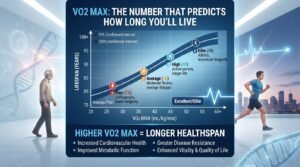
VO2 max is a measure of your cardiovascular fitness — specifically, the maximum amount of oxygen your body can use during intense exercise. It is expressed in millilitres of oxygen per kilogram of body weight per minute (ml/kg/min).
According to a major study published in JAMA Network Open, low cardiorespiratory fitness (measured by VO2 max) was associated with a higher risk of death than smoking, high blood pressure, or type 2 diabetes. That is a striking finding that underscores just how important your cardiovascular fitness is for longevity.
The good news is that VO2 max is highly trainable. Even people who have been sedentary for years can see significant improvements with the right kind of exercise.
How to Improve Your VO2 Max
- High-intensity interval training (HIIT): Short bursts of intense effort followed by rest periods are one of the most effective ways to improve VO2 max quickly.
- Zone 2 cardio (see next section): Consistent moderate-intensity cardio also improves VO2 max over time and is more sustainable long-term.
- Consistency over intensity: You do not need to exercise at maximum effort every session. Regular, varied cardio across the week will steadily improve your VO2 max.
You can estimate your VO2 max through a treadmill or cycling test at a sports medicine clinic, or many modern smartwatches (Garmin, Apple Watch, Polar) provide a reasonable estimate based on heart rate data during exercise.
9. Zone 2 Cardio: The Sweet Spot for Metabolic Health
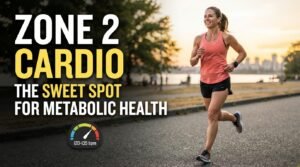
Zone 2 cardio refers to exercise performed at a moderate intensity — roughly 60–70% of your maximum heart rate — where you can hold a conversation but feel genuinely out of breath if you try to speak in full sentences. Think brisk walking, light cycling, easy swimming, or a slow jog.
Zone 2 training is particularly beloved by longevity researchers because of its profound effects on metabolic health. It primarily trains your aerobic energy system, specifically improving the number and efficiency of mitochondria — the energy-producing structures inside your cells. Mitochondrial function declines significantly with age and is a key driver of fatigue, metabolic disease, and biological aging.
Zone 2 Cardio and Longevity
Dr. Peter Attia, a physician and longevity researcher, frequently highlights Zone 2 cardio as one of the four pillars of his longevity exercise framework. Studies show that regular Zone 2 training:
- Improves insulin sensitivity
- Reduces visceral (belly) fat
- Lowers resting heart rate
- Reduces systemic inflammation
- Improves mitochondrial density and function
How to Incorporate Zone 2 Cardio
- Aim for 150–180 minutes of Zone 2 cardio per week, ideally spread across three to five sessions.
- Use a heart rate monitor to ensure you are staying in the right zone. For most people, this is approximately 130–150 beats per minute, depending on age and fitness level.
- Zone 2 sessions can be combined with other activities — a brisk walk after work, a light bike ride on the weekend, or a swim at the local pool all count.
10. Belly Fat, Cortisol, and Why Stress Makes You Age Faster
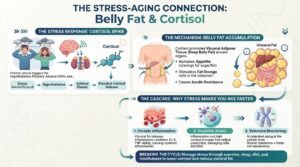
Belly fat — specifically visceral fat, which sits deep inside your abdomen around your organs — is not just an aesthetic concern. It is a biologically active tissue that secretes inflammatory molecules, disrupts insulin signalling, and accelerates biological aging at the cellular level.
One of the main drivers of visceral fat accumulation is cortisol, your primary stress hormone. When you are under chronic stress, your body produces cortisol in elevated amounts for prolonged periods. This signals your body to store fat specifically in the abdominal area, suppresses the immune system, raises blood sugar, and impairs sleep.
The Cortisol-Aging Connection
Chronically elevated cortisol has been shown to:
- Accelerate telomere shortening (aging your cells faster)
- Suppress growth hormone production (reducing repair and recovery)
- Increase blood pressure and cardiovascular risk
- Impair memory and cognitive function
- Increase the risk of depression and anxiety
Reducing stress is therefore not just good for your mental health — it is a direct anti-aging intervention.
Practical Ways to Lower Cortisol
- Daily movement: Even a 20-minute walk lowers cortisol measurably.
- Mindfulness or meditation: Just 10 minutes of focused breathing or body scan meditation per day has been shown in multiple studies to reduce cortisol levels.
- Social connection: Time with people you enjoy and trust is a powerful cortisol regulator.
- Nature exposure: Spending time in green spaces reduces cortisol and psychological stress.
- Reducing caffeine intake: Particularly after midday, as caffeine can elevate cortisol levels.
11. Intermittent Fasting and Aging: What the Research Says
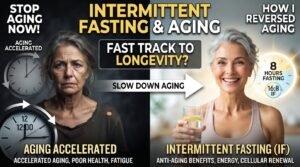
Intermittent fasting (IF) has attracted significant attention in the longevity space, and for good reason. Several biological mechanisms triggered by fasting are directly linked to slowing aging and reducing biological age.
How Fasting May Slow Aging
- Autophagy: Fasting triggers a cellular recycling process called autophagy, in which your body breaks down and clears out damaged or dysfunctional cell components. This is like a cellular spring clean, and it is strongly linked to reduced cancer risk, improved metabolic function, and slower biological aging.
- Insulin sensitivity: Fasting periods reduce your overall insulin exposure, which improves insulin sensitivity over time. Poor insulin sensitivity is a key marker of accelerated aging.
- Reduced inflammation: Studies show that time-restricted eating reduces systemic inflammatory markers, including CRP and IL-6.
Common Intermittent Fasting Approaches
- 16:8 method: Fast for 16 hours (including sleep), eat within an 8-hour window. For example, eating from 12pm to 8pm.
- 12:12 method: A gentler starting point — 12 hours fasting, 12 hours eating. This is closer to what many people already do naturally.
- 5:2 method: Eat normally five days a week, restrict calories significantly on two non-consecutive days.
It is worth noting that intermittent fasting is not necessary for everyone, and it is not appropriate for people with certain health conditions, a history of eating disorders, or those who are pregnant. If you are in any of these categories, speak with a healthcare provider before trying fasting. The key benefits — improved metabolic health, reduced inflammation, better insulin sensitivity — can also be achieved through other means.
I practice a 10-hour eating window most days, finishing my last meal by 7 PM. This is not about calorie restriction alone. It is about giving your metabolic systems a recovery window that supports longevity habits your cells can actually use.
12. Ultra-Processed Food and Its Impact on Your Biological Age

Ultra-processed foods (UPFs) are industrial food products made from substances extracted or derived from real food — or synthesised in laboratories — and typically contain additives, preservatives, artificial colours, emulsifiers, and flavour enhancers. Think packaged snack foods, fast food, breakfast cereals, soft drinks, packaged bread, flavoured yoghurts, and most ready meals.
Research published in Cell Metabolism and other major journals shows that ultra-processed food consumption is strongly associated with accelerated epigenetic aging. People who eat the most ultra-processed foods tend to have biological ages that are significantly older than their chronological ages.
Why Ultra-Processed Foods Age You Faster
- They are typically high in refined sugars and refined carbohydrates, which spike blood glucose and insulin and drive fat storage.
- They often contain industrial seed oils high in omega-6 fatty acids, which promote inflammation when consumed in excess.
- They are usually low in fibre, protein, and micronutrients despite being high in calories.
- Many UPFs contain emulsifiers and additives that disrupt the gut microbiome — and gut health is increasingly understood to be central to metabolic health and aging.
- They are engineered to be hyperpalatable, making it easy to eat far more calories than you intend.
A Simple Approach to Reducing Ultra-Processed Food
I eliminated most ultra processed food from my daily eating about two years ago, and the difference in how I feel and perform is significant. The artificial additives, refined seed oils, and excess sugar in these products promote systemic inflammation that ages your cells from the inside out.
You do not need to eat perfectly to see meaningful benefits. Research suggests that even replacing a portion of your ultra-processed food intake with minimally processed alternatives produces measurable improvements in health markers within weeks.
A simple rule: aim for your diet to consist of at least 80% foods that look like they came from nature — whole fruits and vegetables, whole grains, eggs, meat, fish, legumes, nuts, and seeds.
13. Anti-Aging Foods to Add to Your Plate Right Now

While no single food is a magic solution, a diet consistently rich in certain anti-aging foods creates an internal environment that supports cellular repair, reduces inflammation, and supports the biological processes associated with longer, healthier living.
Top Anti-Aging Foods Backed by Research
- Berries (blueberries, strawberries, raspberries): Rich in polyphenols, particularly anthocyanins, which have been shown to reduce oxidative stress and inflammation — two primary drivers of cellular aging.
- Fatty fish (salmon, sardines, mackerel): Excellent sources of omega-3 fatty acids (EPA and DHA), which reduce inflammation, support brain health, and have been linked to longer telomeres.
- Leafy greens (spinach, kale, rocket, watercress): Packed with magnesium, folate, vitamin K, and nitrates that support cardiovascular health and DNA protection.
- Olive oil (extra virgin): Rich in oleocanthal, a natural anti-inflammatory compound, and monounsaturated fats that support heart and metabolic health.
- Nuts (walnuts, almonds, Brazil nuts): Good sources of healthy fats, protein, selenium (Brazil nuts), and fibre. Regular nut consumption is consistently linked to reduced mortality in large population studies.
- Legumes (lentils, chickpeas, black beans): High in fibre and plant protein, and strongly associated with longevity in populations known for long lifespans.
- Fermented foods (yoghurt, kefir, kimchi, sauerkraut): Support gut microbiome diversity, which is closely linked to metabolic health, immune function, and reduced biological aging.
- Green tea: Contains EGCG (epigallocatechin gallate), a polyphenol that has been shown in studies to support autophagy and reduce cellular aging.
14. GLP-1 Hormones, Creatine, and Magnesium: The Longevity Supplements
GLP-1 and Aging

GLP-1 (glucagon-like peptide-1) is a hormone naturally produced in your gut after eating, particularly when you eat fibre, protein, and healthy fats. It stimulates insulin release, suppresses appetite, slows gastric emptying, and has direct anti-inflammatory effects.
GLP-1 receptor agonists (like semaglutide, the active ingredient in Ozempic and Wegovy) are making headlines for their effects on weight loss and metabolic health. Emerging research also suggests they may have direct anti-aging properties, including reducing cardiovascular disease risk, improving cognitive function, and reducing systemic inflammation.
You can naturally support your GLP-1 levels by eating more fibre-rich foods, protein, fermented foods, and by reducing ultra-processed food intake. Regular exercise also increases GLP-1 production.
The natural ways to lower cortisol and belly fat are interconnected. When I reduced my cortisol through better sleep and stress management while combining Zone 2 cardio with strength training and protein-first eating, my waist circumference dropped meaningfully within 12 weeks. This is not magic. It is how metabolic health after 40 actually works when the inputs align.
Creatine After 40
Creatine after 40 is one of the most evidence-backed supplements I have come across. A 2022 meta-analysis in the Journal of the International Society of Sports Nutrition confirmed that creatine monohydrate supplementation significantly improves muscle mass and strength in older adults when combined with resistance training. But here is what surprised me most: creatine also shows promise for cognitive function, potentially protecting against age-related mental decline.
I take 3 to 5 grams of creatine monohydrate daily. It is inexpensive, safe, and well-tolerated. For anyone looking to reduce biological age with exercise, creatine amplifies the results of your training and supports the muscle quality that epigenetic clocks respond to positively.
Creatine is one of the most studied supplements in existence, and its benefits extend well beyond the gym. For people over 40, creatine offers several compelling longevity-related benefits:
- Supports muscle maintenance: Creatine helps maintain and build muscle mass, which declines with age and is directly linked to longevity and functional independence.
- Cognitive benefits: Studies show that creatine supplementation improves working memory and processing speed, particularly in older adults and vegetarians.
- Bone health: Emerging research suggests creatine may support bone density, particularly when combined with resistance training.
- A typical dose of 3–5g of creatine monohydrate per day is safe, effective, and inexpensive. It is one of the few supplements with a genuinely strong evidence base. Read more about creatine from Examine.com.
Magnesium and Sleep
Magnesium is involved in over 300 biochemical reactions in the body. It is particularly important for sleep quality, stress regulation, muscle function, and blood sugar control — all of which are critical for healthy aging.
Studies suggest that a significant proportion of people do not get enough magnesium from their diet alone. The best dietary sources include dark leafy greens, pumpkin seeds, almonds, black beans, and dark chocolate. If you are supplementing, magnesium glycinate is generally well tolerated and well absorbed, and is particularly useful for its calming and sleep-promoting effects.
15. Morning Routine Habits That Support Longevity

My morning routine is built around three non-negotiables: natural light exposure within 15 minutes of waking (which anchors circadian rhythm and cortisol timing), a protein-forward breakfast of at least 40 grams, and 20 to 30 minutes of low-intensity walking. This combination alone addresses sleep quality, muscle protein synthesis, and Zone 2 cardio contributions to walking and longevity
How you start your day sets the tone for your biology. A thoughtful morning routine built around evidence-based longevity habits can meaningfully support your effort to lower your biological age over time.
A Science-Backed Morning Routine for Longevity
- Get natural light within 30 minutes of waking
Exposure to natural light in the morning sets your circadian rhythm, which regulates sleep, cortisol, metabolism, and hormone production. Even on a cloudy day, being outside for 10–15 minutes is far more effective than indoor lighting.
- Delay caffeine for 60–90 minutes after waking
Your cortisol naturally peaks in the first 30–60 minutes after waking. Drinking coffee during this window can blunt your natural cortisol response and lead to afternoon energy crashes. Waiting 60–90 minutes before your first coffee works with your biology rather than against it.
- Eat a protein-rich breakfast
Starting your day with 30–40g of protein stabilises blood sugar, reduces appetite throughout the day, and supports muscle protein synthesis. Options include eggs with Greek yoghurt, a protein smoothie with pea or whey protein, or salmon and eggs.
- Take a 10-minute walk
Even a short morning walk after breakfast helps manage post-meal blood sugar, reduces cortisol, and contributes to your daily step count and cardiovascular health.
- Cold exposure (optional but supported by research)
A brief cold shower (30–60 seconds of cold water) has been shown to reduce inflammation, improve alertness, and support mood. It is not essential, but it is a useful tool for those who respond well to it.
- Mindfulness or journalling
Just 5–10 minutes of quiet reflection, breathing exercises, or journalling in the morning can reduce baseline cortisol and set a calmer tone for the day — which directly supports metabolic health and slows biological aging.
16. Your Action Plan to Lower Your Biological Age
You do not need to overhaul your entire life overnight to make a meaningful difference to your biological age. Start with small, consistent changes and build from there. Here is a practical, prioritised action plan based on everything covered in this guide:
Week 1–2: Foundation Habits
- Aim for 7–9 hours of sleep every night. Prioritise a consistent bedtime.
- Increase your daily step count to at least 7,000 steps.
- Eat protein at every meal, aiming for at least 25–30g per meal.
- Replace two ultra-processed snacks per day with whole food alternatives.
Week 3–4: Add Movement
- Begin two resistance training sessions per week. Bodyweight exercises are fine to start.
- Add two Zone 2 cardio sessions per week (brisk walking, cycling, swimming).
- Take a 10-minute walk after your main meal each day.
Month 2: Nutrition and Stress
- Add two servings of anti-aging foods to your diet daily (berries, leafy greens, fatty fish).
- Introduce a morning routine that includes natural light exposure and a protein-rich breakfast.
- Start a simple stress-reduction practice: 10 minutes of breathing or walking in nature.
Month 3: Optimise and Test
- Consider taking a biological age test to measure your progress and set new targets.
- Review your magnesium and creatine intake, and consider supplementing if appropriate.
- Experiment with a time-restricted eating window if it suits your lifestyle.
Ongoing Longevity Habits
- Sleep 7–9 hours consistently. This may be the single most impactful thing you do.
- Walk daily. It is never not useful.
- Eat mostly real food. Mostly plants, with good quality protein.
- Move your body with both strength and cardio. Two of each, every week, is enough.
- Manage stress actively. It is aging you at the cellular level if you do not.
- Stay connected socially. Loneliness is as harmful to longevity as smoking.
- Keep learning. Cognitive engagement is directly linked to slower brain aging.
Your biological age is not fixed. The research is clear: the choices you make consistently over time have a measurable, meaningful effect on how old your body actually is. You do not need to be perfect. You just need to be consistent.
17 Frequently Asked Questions
### 1. What is biological age?
Biological age is an estimate of how your body is aging based on certain biological, functional, or molecular markers. Unlike chronological age, which simply counts the years since you were born, biological age attempts to describe aspects of your physiological aging.
There is no single universally accepted test for biological age, and different methods can produce different results.
### 2. Can you actually lower your biological age?
Some aspects associated with biological aging can potentially be improved through lifestyle changes such as regular physical activity, strength training, adequate sleep, a balanced diet, maintaining a healthy body composition, and managing stress.
However, biological age is not one simple number that can reliably be reduced by a specific number of years. Think of “reverse aging” as improving the factors that influence healthy aging rather than literally turning back your chronological age.
### 3. What is the fastest way to improve healthy aging?
There is no single shortcut. For most people, the biggest opportunities are usually the basics: move regularly, build and maintain muscle, improve cardiovascular fitness, sleep consistently, eat a nutrient-dense diet, avoid smoking, limit excessive alcohol, and maintain a healthy body composition.
The most effective strategy is usually the one you can maintain for years rather than a short-term extreme program.
### 4. Does exercise really help you age better?
Yes. Regular physical activity is strongly associated with better cardiovascular health, physical function, metabolic health, and healthy aging.
A balanced program can include walking or other aerobic activity, strength training, mobility work, and activities that challenge your cardiovascular fitness.
### 5. How important is muscle after 40?
Maintaining muscle becomes increasingly important as we get older because muscle supports strength, mobility, independence, glucose regulation, and physical function.
Resistance training combined with adequate protein intake can help adults maintain or build muscle, although individual needs vary.
### 6. How much protein do I need after 40?
Protein needs depend on factors such as body size, activity level, overall diet, and health status. People who regularly exercise, particularly those doing resistance training, may have higher protein requirements than sedentary individuals.
Rather than focusing only on a single number, aim to include a good source of protein in your meals and distribute your intake throughout the day.
### 7. Can walking help with longevity?
Walking is one of the simplest ways to increase daily physical activity. Regular walking is associated with a range of health benefits, particularly when it replaces prolonged sedentary time.
You do not necessarily need to walk 10,000 steps every day to benefit. Increasing your activity from your current baseline can be a useful starting point.
### 8. What is VO2 max and why does it matter?
VO2 max is a measure of the body’s ability to use oxygen during intense exercise. It is commonly used as an indicator of cardiorespiratory fitness.
Higher cardiorespiratory fitness is associated with better health outcomes in population studies. However, VO2 max is only one measure of fitness and should not be interpreted as a precise prediction of how long an individual will live.
### 9. Is Zone 2 cardio necessary for longevity?
Zone 2 training has become popular in longevity discussions because it provides a way to develop aerobic capacity at a relatively manageable intensity.
However, you do not need to obsess over a particular heart-rate number. A practical approach is to regularly perform moderate-intensity aerobic activity where you can still speak in short sentences but are clearly working harder than an easy walk.
### 10. Can poor sleep accelerate aging?
Poor sleep is associated with a range of health problems, including impaired metabolic health, cardiovascular risk, mood changes, and reduced cognitive and physical performance.
Sleep is therefore an important part of a healthy-aging strategy. Most adults should aim for a consistent sleep schedule and generally around 7 to 9 hours of sleep per night.
### 11. Can stress affect how you age?
Chronic psychological stress can affect sleep, eating behavior, physical activity, mood, and other aspects of health. Stress also interacts with several physiological systems involved in metabolism and cardiovascular health.
The goal is not to eliminate all stress. Instead, developing effective recovery strategies such as exercise, breathing practices, relaxation, social connection, and adequate sleep can help you manage it
Share This Post
If you found this guide helpful, share it with someone who might benefit. The more people know about how to lower their biological age naturally, the better. www.reverseagecoach.com


Further Reading
- The Science of Longevity — National Institute on Aging
- Epigenetic Clock Research — Steve Horvath UCLA
- Examine.com — Evidence-Based Supplement Research
- Peter Attia MD — Longevity and Metabolic Health
- Sleep Foundation — Sleep and Health
Disclaimer: This article is for informational purposes only and does not constitute medical advice. Always consult a qualified healthcare professional before making significant changes to your diet, exercise routine, or supplement intake.