



Beyond Weight Loss: 5 Surprising Truths About Intermittent Fasting Formula
In the overwhelming world of health and wellness, it’s easy to feel lost. Every week, a new ‘miracle’ diet emerges, promising everything and often delivering nothing but confusion and a return ticket to your starting weight. This cycle of restriction and disappointment can be utterly exhausting.
Amidst all this noise, Intermittent Fasting (IF) has gained incredible popularity, largely because it feels different. It’s not about counting every calorie or banning your favorite foods; instead, it’s positioned as a lifestyle change. But what is actually happening in your body when you fast, and why is it about so much more than just skipping meals?
This article goes beyond the basics to reveal the five most surprising and impactful truths about Intermittent Fasting. We’ll explore how this eating pattern works on a cellular level to deliver benefits that extend far beyond the bathroom scale.
The Surprising Takeaways
1. It’s about when you eat, not what you eat.


Unlike standard diets that chain you to constant calculations of what you’re eating—restricting calories or specific food groups—Intermittent Fasting is an eating pattern. It simply creates cycles between periods of eating and periods of fasting. This shift in focus from what to when is a radical departure from traditional dieting.
This simple change frees up an incredible amount of mental energy. It sidesteps the constant willpower drain that comes from making dozens of ‘good’ vs. ‘bad’ food choices all day long. During your eating window, you have the freedom to enjoy the foods you love without guilt. For many, this feels less restrictive and far more sustainable, making it a true lifestyle change rather than another short-term fix.
2. Your cells go into a deep-cleaning mode.
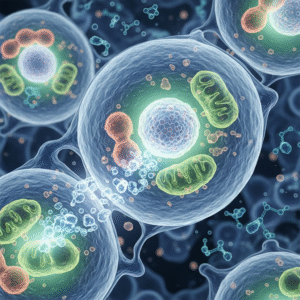
One of the most profound benefits of Intermittent Fasting happens at a microscopic level. When you fast, you activate a powerful process called autophagy. Think of it as your body’s own highly efficient, built-in cleaning crew that gets to work when it isn’t busy digesting food.
This process is a form of cellular spring cleaning. Your cells begin breaking down and metabolizing old, dysfunctional proteins and other waste that can build up over time. It’s a vital self-preservation and recycling program that keeps your cellular machinery running smoothly.
When you fast, your body’s cells begin a process of removing waste cells. This is known as “autophagy”. Autophagy involves the body’s cells being broken down. It also involves the metabolization of dysfunctional and broken proteins that have built up over time in the cells.
The importance of this process cannot be overstated. Experts believe that robust autophagy offers powerful protection against the development of serious illnesses, including cancer and Alzheimer’s Disease, helping you future-proof your body from the inside out.
3. It can rev up your metabolism, not wreck it.
A common myth holds that skipping meals will tank your metabolism, making it harder to lose weight. However, research into short-term fasting reveals the exact opposite to be true. Intermittent Fasting can actually give your metabolism a significant boost.
This isn’t magic; it’s smart biology. The change is driven by powerful hormonal shifts. Your nervous system sends out noradrenaline as a direct order to your fat cells to release their energy stores. Simultaneously, the flood of Human Growth Hormone (HGH) helps protect your muscle mass, ensuring you’re primarily burning fat for fuel, not sacrificing hard-earned muscle. It’s a one-two punch for effective fat loss.
Fasting for short periods of time has been shown to increase metabolic rate by up to 14 percent… HGH (Human Growth Hormone) skyrockets when you fast. It can increase by as much as five times its normal level.
This combination of increased HGH and more accessible body fat for fuel helps you burn more calories and facilitates fat loss, all while debunking the myth that fasting automatically wrecks your metabolism.
4. It’s a powerful tool for brain health.
The benefits of Intermittent Fasting aren’t limited to your waistline; they extend all the way to your brain. IF actively reduces key risk factors for cognitive decline, including oxidative stress, inflammation, and high blood sugar levels. Think of it as future-proofing your brain against age-related decline.
Beyond these protective effects, studies have uncovered even more direct cognitive benefits. Research suggests that intermittent fasting can boost the growth of new nerve cells and increase levels of a brain hormone called Brain-Derived Neurotrophic Factor (BDNF). Since low levels of BDNF have been linked to depression and other cognitive issues, this is a truly remarkable finding.
This reveals that Intermittent Fasting is much more than a weight management tool. It’s a practice that can enhance cognitive function, protect the brain from damage, and support long-term mental clarity and health.
5. It affects men and women differently.
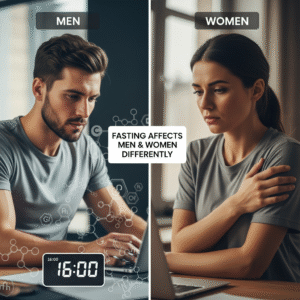
While Intermittent Fasting offers a host of powerful benefits, it is not a one-size-fits-all solution. It’s crucial to approach it with nuance, particularly for women, as evidence suggests female bodies can be more sensitive to the signals of energy restriction.
This sensitivity is rooted in hormonal responses designed for survival and reproduction. When the female body senses starvation, it can trigger a more pronounced hormonal reaction to conserve energy.
…there is evidence that women have a greater sensitivity to starvation signals. When the body senses starvation, it increases production of ghrelin and leptin, the hunger hormones.
This hormonal shift can sometimes lead to issues with the menstrual cycle or thyroid function. This doesn’t mean women cannot fast, but it highlights the absolute importance of listening to your body. While many women thrive on IF, it’s wise to be aware of the potential hormonal impacts and consider starting with a gentler approach, such as a 12-14 hour fast, before moving to more rigorous schedules.
3. Conclusion: A Final Thought
Intermittent Fasting is a much deeper and more complex tool than a simple weight-loss hack. It engages with your body’s fundamental biology, triggering processes for cellular repair, metabolic enhancement, and brain protection.
Ultimately, the power of intermittent fasting may lie not in restriction, but in giving our bodies a scheduled, intentional rest. Could changing when you eat be the most powerful health decision you make this year?