

Stretching Strong – a comprehensive guide to flexibility and vitality at 50

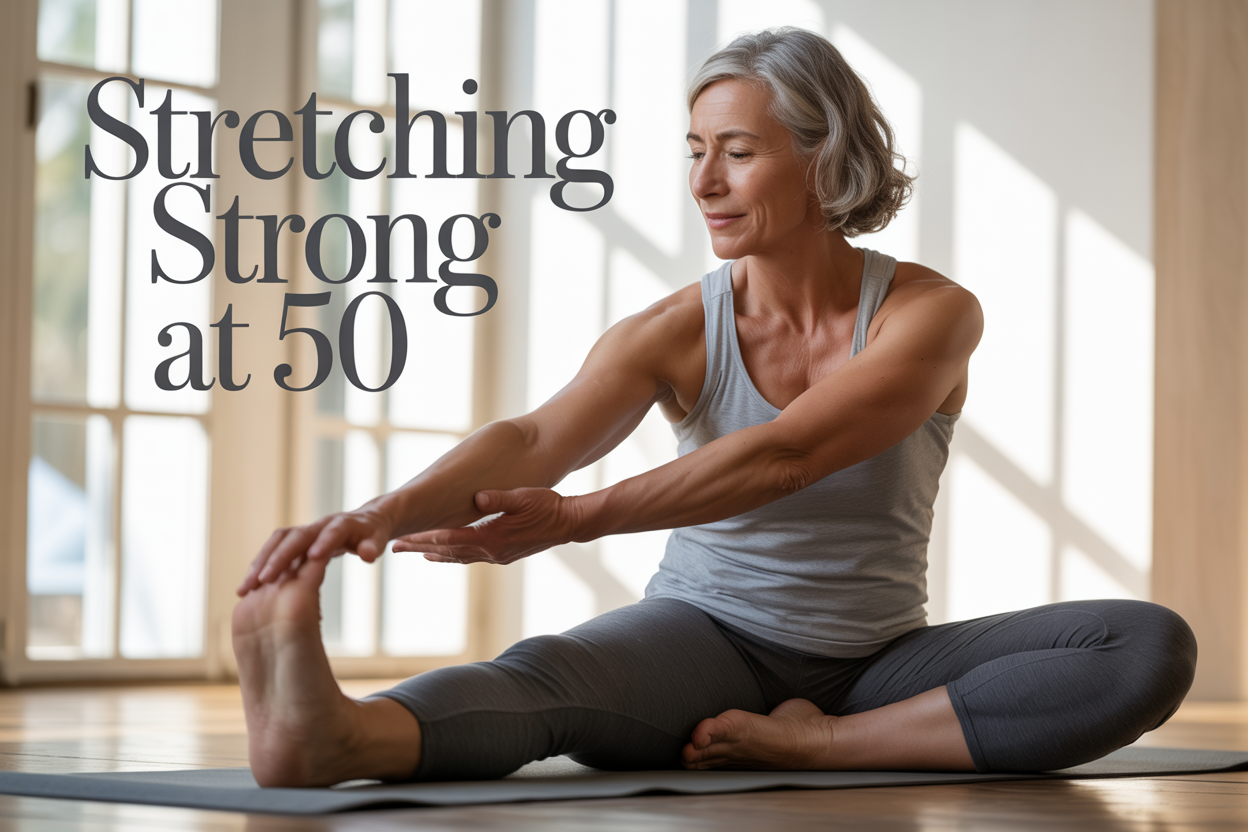
Your body changes after 50, but that doesn’t mean stiffness and limited mobility have to be your new normal. Stretching Strong is designed specifically for adults over 50 who want to reclaim their flexibility and feel more energetic in their daily lives.
This comprehensive guide addresses the unique flexibility challenges aging brings and shows you how to work with your body’s natural changes rather than against them. You’ll discover why flexibility after 50 requires a different approach than what worked in your twenties and thirties.
We’ll start by exploring Understanding Your Body’s Changes After 50 – the real reasons why you feel tighter and how your muscles, joints, and connective tissues shift with age. Then we’ll dive into Essential Stretching Fundamentals for Mature Adults, covering the safest and most effective stretching techniques older adults need to know.
You’ll also learn about Target Areas That Need Extra Attention at 50 – those problem spots like hips, shoulders, and lower back that seem to tighten up overnight and need special care to stay mobile and pain-free.
Ready to move better and feel younger? Let’s get started on your journey to lasting flexibility and vitality.
Understanding Your Body’s Changes After 50

How flexibility naturally decreases with age
Your body’s flexibility doesn’t just wake up one morning and decide to abandon you. The process happens gradually, starting as early as your late twenties, but becoming more noticeable around age 50. Collagen, the protein that keeps your connective tissues supple, begins producing at a slower rate. Your tendons and ligaments start losing their elastic properties, becoming stiffer and less forgiving during movement.
The natural aging process affects your muscle fibers too. They become shorter and tighter, even when you’re not actively using them. This happens because the water content in your tissues decreases, making everything feel more rigid. Your joints also produce less synovial fluid – that slippery lubricant that helps bones glide smoothly against each other.
Think of it like a rubber band that’s been sitting in a drawer for years. It still stretches, but it requires more effort and doesn’t bounce back quite the same way. Your body experiences similar changes, which is why flexibility after 50 requires more intentional care and attention than it did in your younger years.
Joint mobility shifts that impact daily activities
The way your joints move changes significantly after 50, and you’ll likely notice these shifts in your everyday routine first. Your shoulders might feel tight when reaching for something on a high shelf. Your hips could feel stiff when getting out of your car. These aren’t just minor inconveniences – they’re signs that your joint mobility is adapting to the natural aging process.
Your spine becomes particularly vulnerable during this time. The discs between your vertebrae lose height and elasticity, reducing your ability to twist, bend, and extend your back comfortably. Many people find that simple activities like putting on socks or looking over their shoulder while driving become more challenging.
| Daily Activity | Common Mobility Challenge | Body Part Affected |
|---|---|---|
| Getting out of bed | Stiffness in morning | Spine, hips |
| Reaching overhead | Limited shoulder range | Shoulders, upper back |
| Bending to tie shoes | Reduced forward flexion | Lower back, hips |
| Looking behind while driving | Neck rotation restriction | Cervical spine |
| Climbing stairs | Hip and ankle stiffness | Hips, ankles, knees |
Your ankles and feet also experience changes that affect balance and walking patterns. The small joints in your feet may lose some range of motion, while your Achilles tendon becomes tighter, affecting how your foot moves during each step.
Muscle fiber changes that affect stretch capacity
Your muscles undergo fascinating transformations after 50 that directly impact how well you can stretch. Type II muscle fibers, which are responsible for power and quick movements, begin decreasing in both size and number. This leaves you with a higher proportion of Type I fibers, which are great for endurance but don’t contribute as much to flexibility and explosive movement.
The muscle fibers themselves also become less responsive to stretching signals from your nervous system. Your muscles develop what researchers call “increased passive tension” – basically, they resist lengthening even when you’re trying to relax them. This creates a frustrating cycle where your muscles feel tight even after you’ve been stretching regularly.
Sarcopenia, the age-related loss of muscle mass, compounds these issues. As you lose muscle tissue, the remaining fibers often compensate by becoming tighter and more rigid. Your body essentially tries to maintain stability by creating tension in areas where it once relied on strong, flexible muscle fibers.
Cross-linking also occurs within your muscle fibers, where proteins bind together in ways that reduce flexibility. Think of this like internal scar tissue that makes your muscles less pliable. This process happens gradually but becomes more pronounced as you enter your fifties and beyond.
The connection between hormones and tissue elasticity
Hormonal changes after 50 play a massive role in how flexible your body feels and moves. For women, menopause brings a dramatic drop in estrogen levels, which directly affects collagen production. Estrogen helps maintain the elasticity and strength of connective tissues, so when levels decline, your ligaments, tendons, and even your skin become less supple.
Men experience their own hormonal shifts, particularly declining testosterone levels. Testosterone supports muscle mass and bone density, and lower levels can contribute to increased stiffness and reduced recovery time from physical activity. Both men and women may notice that their bodies take longer to warm up before exercise and feel tighter for longer periods after activity.
Growth hormone production also decreases with age, affecting how well your body repairs and maintains tissue quality. This hormone plays a key role in keeping your connective tissues healthy and responsive to stretching and movement.
Your thyroid function may change too, and even slight alterations in thyroid hormone levels can impact muscle tension and joint stiffness. Some people find that addressing thyroid imbalances through medical consultation can significantly improve their flexibility and overall comfort during movement.
Cortisol, your stress hormone, tends to remain elevated more frequently as you age, especially if you’re dealing with chronic stress. High cortisol levels promote inflammation and can make your muscles feel tighter and more resistant to stretching exercises for seniors. Managing stress becomes increasingly important for maintaining flexibility and mobility as you navigate life after 50.
Essential Stretching Fundamentals for Mature Adults

Safe Warm-up Techniques Before Stretching
Your muscles and joints behave differently after 50, needing more time and attention to prepare for flexibility work. Start with gentle movements that mimic daily activities – shoulder rolls, ankle circles, and arm swings get blood flowing without shocking your system. A 5-10 minute walk or marching in place works wonders for warming up your entire body.
Dynamic movements work better than static holds during warm-up. Try leg swings (holding onto a wall for balance), gentle torso twists, and knee lifts. These movements gradually increase your heart rate while preparing muscles for deeper stretching. Think of your warm-up as starting a car on a cold morning – you wouldn’t rev the engine immediately, and your body needs the same gentle approach.
Water plays a key role in joint lubrication. Dehydration makes muscles tighter and more prone to injury, so drink a glass of water 30 minutes before your stretching routine over 50. Your joints contain synovial fluid that needs adequate hydration to function properly.
Proper Breathing Methods During Flexibility Work
Breathing transforms stretching from a mechanical exercise into a relaxation practice. Many mature adults hold their breath when stretching, which actually fights against muscle relaxation. Instead, breathe deeply through your nose, allowing your belly to expand on the inhale.
During static stretches, exhale slowly as you deepen into the position. This triggers your parasympathetic nervous system, telling muscles to release tension. Count your breaths – aim for 30 seconds minimum per stretch, which typically equals 5-6 slow breaths.
The “breathing into the stretch” technique works particularly well for flexibility after 50. Imagine sending your breath to the area being stretched. When stretching your hamstring, visualize breathing into the back of your leg. This mind-muscle connection enhances the effectiveness of your mobility exercises 50 plus.
Distinguishing Between Good Stretch and Harmful Pain
Pain signals demand careful attention as we age. A productive stretch feels like mild tension or a pulling sensation that gradually decreases as you hold the position. Sharp, shooting, or burning sensations indicate potential injury and require immediate attention.
Use a 1-10 scale where 10 represents excruciating pain. Beneficial stretching should never exceed 6-7 on this scale. The “good hurt” of stretching feels warm and releasing, while harmful pain feels cold, sharp, or radiating.
| Good Stretch Sensations | Warning Pain Signals |
|---|---|
| Gentle pulling or tension | Sharp, stabbing pain |
| Warm, releasing feeling | Burning sensation |
| Decreases over 30 seconds | Increases with time |
| Localized to target muscle | Radiates to other areas |
Pay special attention to joint pain versus muscle tension. Joints should never hurt during stretching exercises for seniors. If you feel pain in your knee, hip, or shoulder joint itself, back off immediately and consider consulting a healthcare provider.
Optimal Timing and Frequency for Stretching Sessions
Your body’s flexibility naturally fluctuates throughout the day. Most people find their muscles most receptive to stretching in late morning or early evening when body temperature is naturally higher. Avoid intense flexibility training mature adults sessions first thing in the morning when discs are fuller and muscles are stiff.
Daily stretching yields better results than longer, infrequent sessions. Fifteen minutes daily beats one hour weekly. Consistency allows your nervous system to adapt gradually, making permanent improvements in range of motion. Your daily stretching guide seniors should include at least one session, but two shorter sessions often work better for busy schedules.
Post-exercise stretching capitalizes on already-warmed muscles. If you walk, swim, or do strength training, dedicate 10-15 minutes afterward to flexibility work. Your muscles are primed for improvement, and you’ll see faster progress in your stretching techniques older adults routine.
Weekend “catch-up” stretching often backfires. Cramming a week’s worth of flexibility work into one session can cause muscle soreness and doesn’t provide the consistent stimulus your nervous system needs to improve flexibility after 50. Small, regular doses beat sporadic intensive sessions every time.
Target Areas That Need Extra Attention at 50

Hip Flexors and Lower Back Relief Strategies
Your hips and lower back work as a connected system, and after 50, tightness in these areas can significantly impact your daily comfort and mobility. Hip flexors, the muscles at the front of your hips, often become shortened from years of sitting, while your lower back bears the brunt of compensatory movements.
The 90/90 hip stretch targets multiple angles simultaneously. Sit on the floor with one leg bent at 90 degrees in front of you and the other at 90 degrees to your side. Lean forward gently over your front leg, holding for 30-45 seconds before switching sides. This stretching routine over 50 should become your go-to for hip mobility.
For lower back relief, the knee-to-chest stretch provides immediate tension release. Lie on your back, pull one knee toward your chest, and hold for 30 seconds. Follow with the cat-cow stretch on hands and knees, arching and rounding your spine slowly for 8-10 repetitions.
The pigeon pose modification works wonders for deep hip flexor release. Start in a low lunge, then lower your back knee to the ground and sink your hips forward. Hold for 45-60 seconds per side. These flexibility exercises for seniors should be performed daily for maximum benefit.
Shoulder and Neck Tension Release Methods
Shoulder and neck stiffness affects nearly everyone over 50, often stemming from poor posture, stress, and reduced daily movement patterns. These areas require gentle but consistent attention to maintain healthy range of motion.
Doorway chest stretches combat the forward shoulder posture common in mature adults. Stand in a doorway with your forearm against the frame at shoulder height. Step forward gently until you feel a stretch across your chest and front shoulder. Hold for 30 seconds, then repeat with your arm positioned higher and lower for complete coverage.
The neck side stretch addresses lateral tension effectively. Sit tall and gently tilt your head to one side, using your hand to apply light pressure. Hold for 20-30 seconds per side. Follow with neck rotations – slow, controlled circles in both directions.
Cross-body shoulder stretches target the posterior deltoids and upper back. Pull your arm across your chest at shoulder height, using your opposite hand to gently increase the stretch. Hold for 30 seconds per arm.
The upper trap stretch releases the muscles connecting your neck to your shoulders. Tilt your head to one side while reaching the opposite arm toward the floor. This mobility exercise for 50 plus adults should feel gentle yet effective.
Ankle and Calf Flexibility for Better Balance
Balance becomes increasingly important after 50, and ankle flexibility plays a crucial role in stability and fall prevention. Tight calves and restricted ankle mobility can significantly impact your confidence when walking on uneven surfaces.
Calf stretches against a wall provide the foundation for ankle flexibility. Place your hands against a wall, step one foot back about three feet, and keep your heel down while leaning forward. Hold for 45 seconds per leg. Perform both straight-leg and bent-knee versions to target different muscle groups.
Seated ankle circles can be done anywhere and help maintain joint mobility. Sit comfortably and lift one foot slightly off the ground. Rotate your ankle slowly in both directions, 10-15 circles each way. This simple flexibility training for mature adults fits easily into your daily routine.
The towel calf stretch works perfectly for morning routines. Sit with legs extended, loop a towel around the ball of one foot, and gently pull your toes toward you while keeping your leg straight. Hold for 30-40 seconds per leg.
Heel-to-toe walking combines stretching with balance training. Walk in a straight line, placing the heel of one foot directly in front of the toes of the other foot. This daily stretching guide for seniors exercise improves both flexibility and proprioception, helping prevent falls while maintaining ankle mobility.
Building Your Daily Flexibility Routine
Morning stretches to energize your day
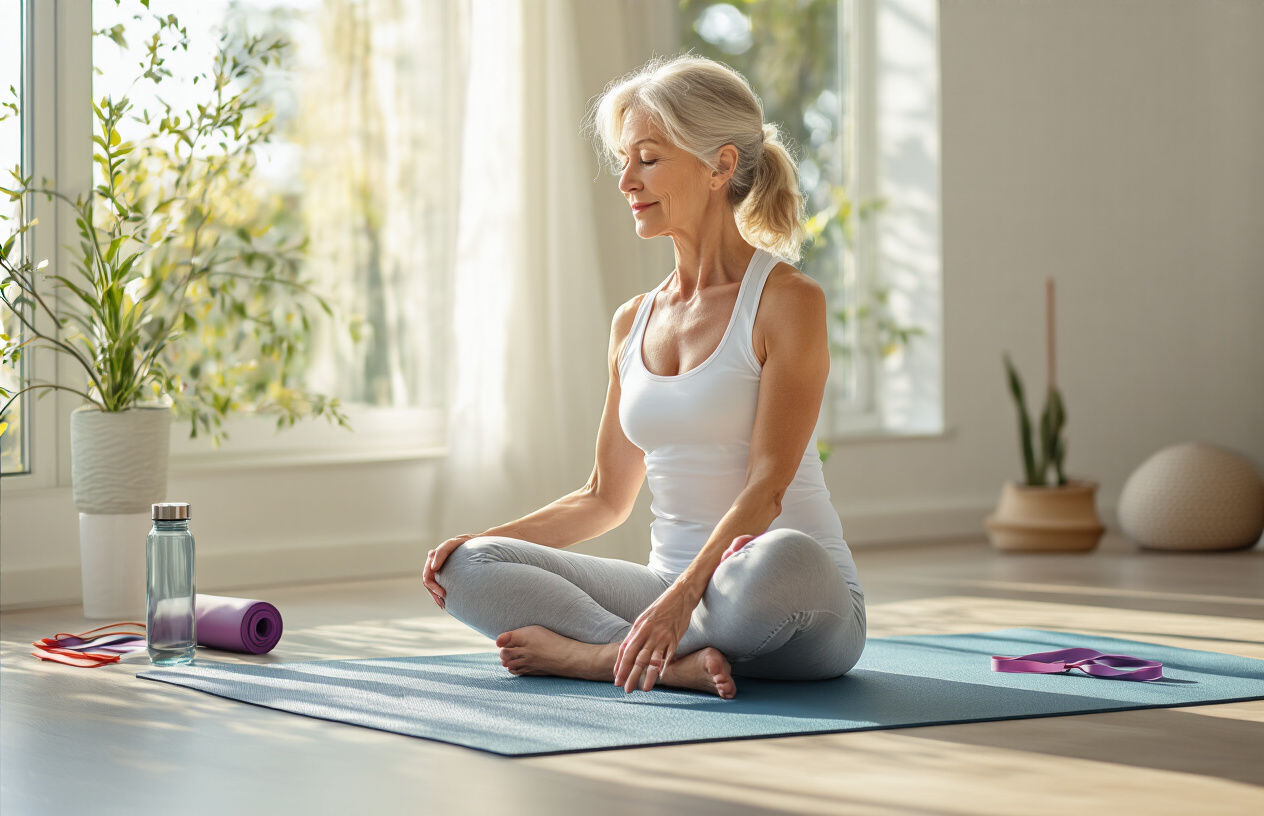
Starting your day with gentle stretching exercises for seniors sets a positive tone for everything that follows. Your body has been relatively stationary for 6-8 hours, and your muscles need a wake-up call to function optimally throughout the day.
Begin with spinal mobility by lying on your back and gently drawing your knees to your chest, holding for 30 seconds. This movement lubricates your spine and eases morning stiffness. Follow with gentle neck rolls and shoulder shrugs while still in bed to address the tension that accumulates overnight.
The cat-cow stretch on your hands and knees provides excellent spinal flexibility after 50. Move slowly through 8-10 repetitions, focusing on the connection between breath and movement. Add gentle forward folds while seated on the edge of your bed to awaken your hamstrings and lower back.
Complete your morning routine with arm circles and ankle rotations to improve circulation and joint mobility. This entire sequence should take just 10-15 minutes but will significantly impact your energy levels and movement quality throughout the day.
Workplace stretches for desk-bound professionals
Prolonged sitting creates specific flexibility challenges aging adults face daily. Every 30-60 minutes, incorporate these desk-friendly movements into your work routine.
Seated spinal twists combat the forward posture that develops from computer work. Sit tall, place one hand on the opposite knee, and gently rotate your torso. Hold for 15-20 seconds each direction.
Neck and shoulder releases are essential for mobility exercises 50 plus. Slowly drop your ear toward your shoulder, feeling the stretch along the opposite side of your neck. Roll your shoulders backward in large circles to counteract the forward head posture.
Hip flexor stretches can be performed right at your desk. Step one foot back into a lunge position while holding your chair for balance. This targets the tight hip flexors that develop from prolonged sitting.
Calf raises and ankle circles under your desk maintain lower leg circulation and prevent stiffness. These subtle movements won’t disrupt your work but will keep your body active throughout the day.
Evening wind-down stretches for better sleep
Your nighttime stretching routine over 50 should focus on releasing the day’s tension and preparing your body for restorative sleep. These calming movements activate your parasympathetic nervous system, signaling it’s time to rest.
Gentle forward folds while seated on your bed help decompress your spine after a full day of gravity’s effects. Breathe deeply and allow your body to naturally settle deeper into the stretch.
Supine figure-four stretches target tight hips and glutes while lying comfortably. Cross one ankle over the opposite knee and gently draw your legs toward your chest. This position is particularly effective for releasing lower back tension.
Legs-up-the-wall pose is a restorative position that improves circulation and calms the nervous system. Lie on your back with your legs extended up against a wall for 5-10 minutes.
End with progressive muscle relaxation, consciously tensing and releasing each muscle group from toes to head. This practice not only improves flexibility training mature adults but also enhances sleep quality by teaching your body to fully relax.
Weekend deeper flexibility sessions
Weekends provide the perfect opportunity for longer, more comprehensive daily stretching guide seniors sessions. Dedicate 30-45 minutes to deeper stretches that weekday routines don’t allow time for.
Extended hold times become the focus during weekend sessions. Instead of the typical 15-30 second holds, allow yourself to settle into stretches for 1-2 minutes. This duration allows your connective tissues to respond more effectively to the stretch stimulus.
Multi-planar movements address flexibility in all directions. Include lateral stretches, rotational movements, and diagonal patterns that challenge your body beyond the typical forward-and-back motions of daily activities.
Props and tools enhance your weekend sessions. Yoga blocks, straps, and foam rollers can help you achieve deeper stretches safely while maintaining proper alignment.
Create flow sequences that link multiple stretches together. Moving from warrior pose to triangle pose to wide-legged forward fold creates a comprehensive hip and leg flexibility session that feels more like movement meditation than exercise.
Partner stretching with a spouse or friend adds variety and can help you achieve ranges of motion that might be difficult alone. Always communicate clearly and move slowly when working with a partner to avoid injury.
Advanced Techniques for Maximum Results
Dynamic stretching versus static stretching benefits
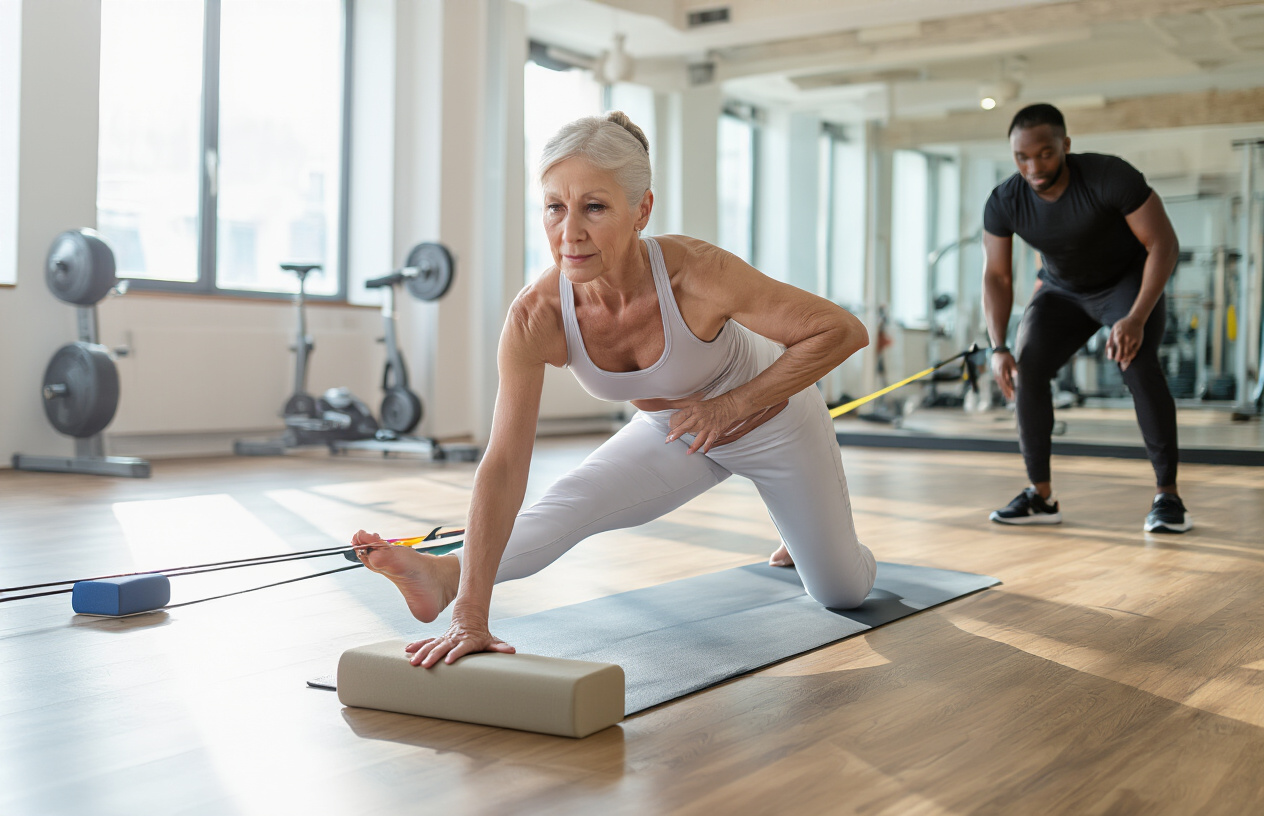
Dynamic stretching involves moving your body through a range of motion while gradually increasing reach and speed. For those over 50, this approach serves as an excellent warm-up before physical activity, preparing muscles and joints for movement. Think arm circles, leg swings, or gentle torso twists. These movements increase blood flow, raise body temperature, and activate the nervous system.
Static stretching, where you hold a position for 15-60 seconds, works better after exercise or as part of a dedicated flexibility training session. The beauty of static stretches lies in their ability to lengthen muscle fibers and improve overall range of motion over time. Mature adults particularly benefit from static stretching because it helps counteract the muscle tightness that naturally develops with age.
Combining both approaches maximizes results. Start your stretching routine with 5-10 minutes of dynamic movements, then transition to static holds for deeper muscle relaxation and improved flexibility after 50.
Incorporating yoga poses for whole-body wellness
Yoga offers incredible benefits for stretching exercises for seniors, addressing multiple body systems simultaneously. Cat-cow stretches mobilize the spine while strengthening core muscles. Warrior poses build leg strength while opening hip flexors and improving balance.
Mountain pose teaches proper alignment and body awareness, crucial for preventing injury during other activities. Child’s pose provides gentle spinal elongation and stress relief. Downward-facing dog stretches the entire posterior chain while building upper body strength.
Bridge pose strengthens glutes and hamstrings while opening the chest and hip flexors. Tree pose challenges balance while stretching the inner thighs. These poses create a comprehensive flexibility training routine for mature adults that addresses common problem areas.
Start with modified versions using props for support, then progress as your strength and flexibility improve. Hold each pose for 30-60 seconds, breathing deeply to enhance the stretch.
Using props and tools to enhance your practice
Props transform challenging stretches into accessible movements for seniors. Yoga blocks support your hands in forward folds when you can’t reach the floor. Straps extend your reach in seated forward bends or overhead stretches, making stretching techniques for older adults more effective.
Resistance bands provide gentle assistance for shoulder stretches while building strength simultaneously. Foam rollers release muscle tension before stretching, making your flexibility routine over 50 more productive. Bolsters support your body in restorative poses, allowing deeper relaxation.
A simple towel serves multiple purposes: sliding under your foot for hamstring stretches, supporting your head in lying positions, or providing grip assistance. Chairs offer stability for standing stretches and modification options for floor exercises.
Wall support transforms challenging balance poses into accessible movements. Even tennis balls work as massage tools to release tight spots before stretching.
Partner stretching techniques for added motivation
Partner stretching adds a social element to mobility exercises for seniors while providing gentle assistance to deepen stretches safely. Your partner can apply steady, controlled pressure to help you achieve greater range of motion than possible alone.
The seated forward fold becomes more effective when a partner gently presses on your back. Hamstring stretches improve with a partner supporting your leg while you lie down. Shoulder stretches benefit from a partner’s gentle guidance to proper alignment.
Communication is essential. Use clear verbal cues like “more,” “less,” or “hold” to guide your partner’s assistance. The person stretching controls the intensity, while the partner provides consistent, steady pressure without forcing movement.
Partners also provide accountability and motivation, making it easier to maintain a regular stretching routine. Schedule regular sessions together, whether with a spouse, friend, or fitness buddy. This consistency helps improve flexibility after 50 while making the process more enjoyable and sustainable.
Overcoming Common Flexibility Challenges
Working around arthritis and joint stiffness
Joint stiffness and arthritis don’t have to derail your flexibility after 50 goals. The key lies in understanding when to push gently and when to back off. Start your stretching sessions with gentle movements to warm up stiff joints – try arm circles, ankle rolls, and slow shoulder shrugs before diving into deeper stretches.
Heat becomes your best friend when dealing with arthritis. Apply a warm compress to affected joints for 10-15 minutes before stretching, or better yet, stretch after a warm shower when your muscles and joints are naturally more pliable. Water-based stretching in a heated pool offers excellent relief, as the buoyancy reduces pressure on painful joints while the warmth soothes inflammation.
Modify traditional stretches to accommodate your comfort level. Instead of forcing a deep forward bend that aggravates your back, try seated spinal twists with gentle rotation. Replace high-impact movements with supported versions – use a wall for balance during leg stretches or sit in a chair for upper body flexibility work.
Listen to your body’s signals carefully. Sharp, shooting pain means stop immediately, while mild discomfort often indicates you’re working within appropriate limits. Some days will feel better than others, and that’s completely normal. On high-pain days, focus on gentle range-of-motion exercises rather than deep stretches.
Anti-inflammatory foods can support your flexibility efforts from the inside out. Include omega-3 rich fish, leafy greens, and berries in your diet to help manage joint inflammation naturally.
Adapting stretches for previous injuries
Past injuries create unique challenges that require thoughtful modifications to your stretching routine over 50. Your body has likely developed compensation patterns around old injury sites, creating tight spots in unexpected places while leaving previously injured areas potentially weaker or hypermobile.
Start by identifying your specific limitations. A previous knee surgery might mean avoiding deep lunges, while an old shoulder injury could require modified arm positions during spinal stretches. Work with your body’s current reality rather than fighting against it.
Create alternative pathways to achieve similar benefits. Can’t do traditional hamstring stretches due to a back injury? Try lying on your back with a resistance band around your foot to control the stretch intensity. Shoulder problems preventing overhead reaches? Focus on gentle cross-body stretches and wall slides instead.
Flexibility training mature adults often requires props and supports that weren’t necessary in younger years. Use yoga blocks, bolsters, and straps to make positions accessible. A simple towel can become a stretching aid for tight shoulders or hamstrings when your range of motion is limited.
Build strength alongside flexibility in previously injured areas. Weak muscles around old injury sites can lead to compensation and new problems. Combine gentle stretching with light strengthening exercises to create balanced support.
Document what works and what doesn’t. Keep a simple log noting which modifications feel good and which positions cause discomfort. This information becomes invaluable for tracking progress and avoiding setbacks.
Staying motivated when progress feels slow
Progress in flexibility challenges aging adults face often happens in millimeters, not dramatic improvements. This reality can test even the most determined individuals, especially when comparing current abilities to past flexibility levels.
Redefine what progress looks like. Instead of focusing solely on how far you can reach, celebrate increased comfort during daily activities. Maybe putting on socks feels easier, or you can look over your shoulder while driving without neck strain. These functional improvements matter more than touching your toes.
Set micro-goals that feel achievable. Rather than aiming to regain the flexibility of your 30s, focus on small wins like holding a stretch for 10 seconds longer or adding one new mobility exercises 50 plus routine to your week. Small victories build momentum and confidence.
Track your journey visually. Take photos or videos of your stretches every few weeks. The gradual changes that feel imperceptible day-to-day become obvious when compared over time. Your hamstring stretch might only improve by inches over months, but seeing the visual evidence validates your efforts.
Find accountability partners who understand the unique challenges of stretching exercises for seniors. Join online communities or local groups where people share similar goals and struggles. Celebrating someone else’s achievement to reach their ankles when they couldn’t touch their shins last month puts your own progress in perspective.
Remember that consistency trumps intensity at this stage of life. Missing a day doesn’t erase your progress, but stopping altogether does. Even five minutes of gentle stretching maintains momentum better than sporadic intense sessions followed by weeks of inactivity.


Your body at 50 deserves the same care and attention you’ve always given it, just with a smarter approach. The changes that come with age don’t have to mean giving up on flexibility and movement. By focusing on the areas that need extra love—like your hips, shoulders, and lower back—and building a consistent daily routine, you can maintain and even improve your range of motion. The key is starting where you are, not where you think you should be.
Remember that flexibility isn’t about touching your toes or doing perfect splits. It’s about feeling good in your own skin and moving through life with confidence and ease. Start with just 10 minutes a day of gentle stretching, listen to your body, and be patient with the process. Your future self will thank you for taking these steps today to stay strong, mobile, and vibrant for years to come.