

Your Age Is Not Just One Number — How to Track and Reverse the 8 Organ Clocks That Actually Matter
Quick Answer: Your body contains at least 8 separate biological clocks — your brain, heart, liver, muscles, bones, lungs, mitochondria, and immune system — each aging at a completely different rate. You could be 45 on paper while your brain is 35 and your liver is 55. The goal of biological age reversal is not to slow one clock. It is to keep all of them running younger for longer using evidence-based interventions like strength training, sleep optimization, blood sugar control, and protein intake — which improve multiple organ clocks simultaneously. This article breaks down each clock, shows you how to measure it, and gives you the exact interventions that work across all eight.

Let me tell you something that completely changed how I think about aging.
For two decades, I’ve been obsessed with measuring my own biological age.
I track my HRV (heart rate variability). I monitor my sleep quality using a Garmin. I test my blood sugar response to different foods. I measure my VO2 max. I track my resting heart rate, my recovery time, my insulin sensitivity.
But here’s what I didn’t fully understand until recently.
All of that data is telling me something much more nuanced than a single number.
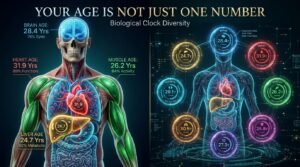
It is telling me that my brain is aging at one rate. My heart at another. My muscles at yet another. My liver, my bones, my lungs — they’re all on completely different biological clocks.
This insight changes everything about how you should approach longevity.
Because the truth is this: you are not one organism aging uniformly.
You are a collection of biological clocks. And your job is to keep as many of them ticking as young as possible for as long as possible.
I’m Arshad , founder of Reverse Age Academy and creator of the RAI 8-Intelligence Framework. And this article is the most comprehensive breakdown I’ve ever written about the organ clocks that actually determine how fast you age — and more importantly, how to reverse them.
Let’s get started.
The Revolution in Longevity Science: Your Body Has Multiple Biological Clocks
Here is what longevity science has quietly discovered over the last decade.
Biological aging is not uniform. It is not one process. It is not one clock ticking at the same rate across your entire body.
Instead, different organs and systems age at dramatically different rates depending on your lifestyle, stress levels, genetics, and daily choices. According to research published in Aging Cell, your biological age — as measured by multiple epigenetic clocks — can vary by 5, 10, or even 15 years from your actual calendar age.
More importantly: these organ clocks can be manipulated independently.
You cannot change your birthday. But you can absolutely slow — and even reverse — the aging rate of your brain, your heart, your liver, your muscles, and every other organ system in your body.
According to the Buck Institute for Research on Aging, which studies the fundamental mechanisms of aging, the discovery that organ aging is modular — meaning each system can be influenced separately — represents one of the most significant findings in longevity science.
Think of it like this.
Your body is not a single car with one engine aging at one rate.
Your body is a fleet of vehicles. Each one has its own engine. Each one is experiencing its own wear and tear. And each one responds independently to maintenance and repair.
The goal of reverse aging is to keep every vehicle on the fleet running younger for longer.
That is what this article is about.
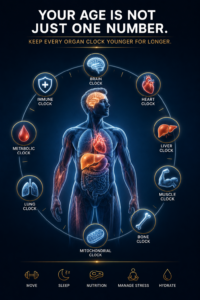
The 8 Biological Clocks You Need to Know About
Let me break down each major organ clock that determines your true biological age.
🧠 The Brain Clock: Cognitive Age
Your brain is aging. Right now. As you read this sentence.
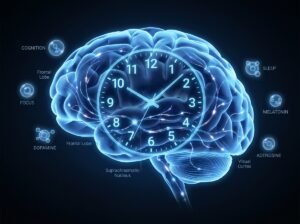

And the rate at which it ages is almost entirely within your control.
Cognitive decline — memory loss, brain fog, difficulty concentrating, reduced focus — is not an inevitable part of aging. It is a sign of accelerated brain aging, which is almost always driven by modifiable lifestyle factors. According to Harvard Medical School’s Center for Brain Health, the five primary drivers of accelerated brain clock aging are sleep deprivation, chronic inflammation, poor blood sugar control, chronic stress, and physical inactivity.
What accelerates your brain clock:
- Chronic poor sleep (less than 6–7 hours nightly)
- Elevated fasting blood glucose and insulin resistance
- Chronic stress and elevated cortisol
- Sedentary lifestyle — lack of physical activity
- Processed food diet high in sugar and inflammatory oils
- Social isolation and lack of cognitive challenge
What reverses your brain clock:
- 7–9 hours of high-quality sleep nightly (this is non-negotiable for brain health)
- Regular aerobic exercise — even 30 minutes of walking daily improves cognitive function
- Mediterranean-style diet with polyphenol-rich foods shown to slow cognitive decline
- Social engagement and meaningful relationships
- Continuous learning and cognitive challenge
- Stress management practices like meditation or breathwork
The research from Stanford’s Centre on Longevity is clear: cognitive function is one of the most reversible organ clocks. Brain fog that you thought was permanent can disappear in weeks with proper sleep and stress management. Memory decline can stabilise and even improve with exercise and metabolic health optimisation.
❤️ The Heart Clock: Cardiovascular Age
Your cardiovascular system has its own biological clock.
And it is one of the most visible ones.
Your heart clock ages based on your blood pressure, your arterial stiffness (how flexible your blood vessels are), your inflammation levels, your insulin sensitivity, and how much physical stress you place on your cardiovascular system through exercise or physical activity.
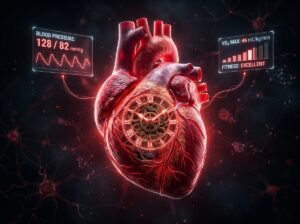
According to research cited by the American Heart Association, a person’s cardiovascular age can differ by 20+ years from their chronological age. A 50-year-old with excellent cardiovascular fitness, normal blood pressure, and good metabolic health might have a heart clock showing 35. Another 50-year-old with hypertension, poor fitness, and metabolic syndrome might have a heart clock showing 70.
What accelerates your heart clock:
- High blood pressure (hypertension) — one of the strongest predictors of cardiovascular disease
- Sedentary lifestyle and lack of exercise
- Insulin resistance and metabolic dysfunction
- Smoking and air pollution exposure
- Chronic inflammation and high inflammatory markers like CRP (C-reactive protein)
- Poor sleep quality and sleep apnea
- Visceral fat accumulation (belly fat specifically)
What reverses your heart clock:
- Regular exercise — both aerobic activity and resistance training improve cardiovascular function
- Controlling blood pressure through salt reduction, exercise, and stress management
- Optimising insulin sensitivity through diet and movement
- Reducing inflammation through anti-inflammatory foods and lifestyle
- Quality sleep — critical for cardiovascular recovery and blood pressure regulation
- Mediterranean or DASH diet — both proven to reverse cardiovascular aging
A study published in Circulation demonstrated that people who adopted high-intensity exercise protocols showed reversal of cardiovascular age markers within just 8 weeks.
🫀 The Liver Clock: Metabolic Age
Your liver is your body’s primary detoxification and metabolic organ.
And it is aging based on what you eat, how much you exercise, your insulin sensitivity, and your inflammation levels.
The liver clock is particularly important because your liver function directly influences every other organ system in your body. A metabolically young liver keeps your whole system running efficiently. An aging liver cascades decline throughout your entire body.
Fatty liver disease — which affects approximately 25–30% of adults globally, and even higher in the GCC region — is a direct sign of accelerated liver clock aging. According to research from the NIH, non-alcoholic fatty liver disease (NAFLD) is driven almost entirely by insulin resistance, excess fructose and added sugar consumption, and metabolic dysfunction.
What accelerates your liver clock:
- Excess sugar and refined carbohydrates
- Fructose (especially from processed foods and sugary drinks)
- Alcohol consumption beyond moderate levels
- Sedentary lifestyle and lack of movement
- Insulin resistance and metabolic syndrome
- Omega-6 vegetable oils (seed oils) in excess
- Chronic stress and poor sleep
What reverses your liver clock:
- Reducing added sugars and refined carbohydrates
- Regular resistance training and exercise (both reduce liver fat directly)
- Mediterranean diet with emphasis on polyphenol-rich foods like berries, olive oil, and leafy greens
- Intermittent fasting or time-restricted eating (shown to improve liver function and insulin sensitivity)
- Adequate sleep — the liver performs most metabolic repair during deep sleep
- Adequate hydration
According to a landmark trial published in Hepatology, people who adopted a Mediterranean-style diet and regular exercise showed measurable reversal of fatty liver disease within just 6 months.

💪 The Muscle Clock: Strength and Functional Age
This is the organ clock that most people completely ignore.
Until it is too late.
Your muscles are literally the scaffolding of your biological structure. They hold your skeleton. They control your metabolism. They produce the hormones and compounds that regulate aging itself.
And after age 30, muscle mass declines at a rate of 3–5% per decade if you are sedentary. If you remain active with resistance training, that rate drops to less than 1% per decade.
This is not a cosmetic issue. This is a longevity issue.
According to research from the Mayo Clinic and published in the Journal of Applied Physiology, sarcopenia (age-related muscle loss) is one of the strongest predictors of disability, frailty, and premature death in older adults.
More importantly: muscle loss is almost entirely reversible — even in people over 80 years old.
A landmark study showed that people who adopted resistance training protocols improved muscle strength by 25–30% in just 10 weeks, and continued improving for 6 months.
What accelerates your muscle clock:
- Sedentary lifestyle — sitting for more than 8 hours daily
- Inadequate protein intake (most people eat far too little protein as they age)
- Lack of resistance training or strength work
- Poor sleep and inadequate recovery
- Chronic inflammation and stress
- Hormonal decline (particularly testosterone and growth hormone)
What reverses your muscle clock:
- Resistance training 3–4 times per week — this is the single most powerful intervention for muscle health
- Adequate protein intake — 1.2–2g per kg of body weight daily (most people need far more than they currently eat)
- Progressive overload — gradually increasing the challenge of your resistance training
- Adequate sleep and recovery between training sessions
- Sufficient caloric intake — muscle cannot be built in a severe caloric deficit
- Creatine supplementation (one of the most evidence-backed supplements for muscle health and longevity)
The beauty of the muscle clock is that it responds faster than any other organ to intervention. You can see measurable muscle improvement in just 4–6 weeks of consistent resistance training.
🦴 The Bone Clock: Structural Age
Your bones are living tissue. They are constantly being remodeled.
And they are aging based on your exercise (especially resistance training and impact activities), your vitamin D status, your nutrition, and your hormonal health.
Osteoporosis and osteopenia — loss of bone density — are not inevitable parts of aging. They are signs of accelerated bone clock aging, almost always driven by insufficient exercise, poor vitamin D status, and inadequate nutrition (particularly protein and micronutrients).

According to the International Osteoporosis Foundation, bone density is one of the most modifiable organ clocks. People who were diagnosed with osteopenia or early-stage osteoporosis and adopted resistance training and vitamin D supplementation protocols showed reversal of bone loss and even modest bone density gains within 12 months.
What accelerates your bone clock:
- Sedentary lifestyle — bone requires mechanical load to stay strong
- Low vitamin D status (critical for bone health and immune function)
- Inadequate protein intake
- High inflammation
- Hormonal decline, particularly in women post-menopause
- Excess alcohol consumption
- Certain medications (like corticosteroids)
What reverses your bone clock:
- Resistance training and impact exercise (both rebuild bone density)
- Adequate vitamin D — aiming for serum levels of 40–60 ng/mL
- Sufficient protein — critical for bone matrix formation
- Calcium intake from food sources (dairy, leafy greens, etc.)
- Weight-bearing activity and exercise
- Adequate sleep for bone remodeling
🫁 The Lung Clock: Respiratory Age
Your lungs are aging.
And most people don’t notice until they’re significantly declined.
Your lung clock ages based on your physical activity level, your exposure to air pollution or smoking, your cardiovascular fitness (which directly determines lung capacity), and your overall metabolic health.
Reduced lung capacity and poor oxygen delivery are hallmarks of accelerated lung aging, even in people who have never smoked. According to research from the Harvard School of Public Health, sedentary professionals show significantly accelerated lung clock aging compared to active individuals of the same age.
What accelerates your lung clock:
- Smoking (obviously)
- Air pollution exposure
- Sedentary lifestyle — physical activity is the primary driver of lung capacity maintenance
- Poor cardiovascular fitness
- Chronic respiratory infections
- Sleep apnea (impairs oxygen delivery)
What reverses your lung clock:
- Regular aerobic exercise — even 30 minutes of moderate activity daily maintains lung capacity
- High-intensity exercise (builds VO2 max and lung function)
- Resistance training (improves breathing mechanics)
- Quitting smoking (lung function begins improving within weeks)
- Sleep optimisation
- Reducing air pollution exposure where possible
🧬 The Mitochondrial Clock: Energy Age
This is the clock that sits at the center of all aging.
Your mitochondria are the powerhouses of your cells. They produce ATP — the energy currency that powers every single process in your body. And they are aging based on your exercise level, your sleep quality, your nutrition, and your metabolic health.

Many longevity researchers — including Dr. David Sinclair at Harvard — believe that mitochondrial decline is the fundamental driver of biological aging. When your mitochondria age, everything ages.
Mitochondrial dysfunction shows up as fatigue, poor recovery from exercise, brain fog, lack of resilience, and rapid aging.
According to research from the University of Western Australia, high-intensity exercise protocols literally reverse mitochondrial aging at the cellular level — improving mitochondrial function by up to 50% in just 6 weeks.
What accelerates your mitochondrial clock:
- Sedentary lifestyle
- Poor sleep quality
- High inflammation
- Metabolic dysfunction and insulin resistance
- Caloric excess and obesity
- Chronic stress
- Environmental toxins
What reverses your mitochondrial clock:
- High-intensity exercise (the most powerful mitochondrial stimulus known)
- Intermittent fasting or time-restricted eating (activates mitochondrial renewal)
- Quality sleep — critical for mitochondrial repair
- Adequate protein and micronutrient intake
- Managing metabolic health and insulin sensitivity
- Cold exposure and heat stress (mild stress stimulates mitochondrial adaptation)
- Exercise intensity matters more than duration for mitochondrial health
🛡️ The Immune Clock: Defense Age
Your immune system is aging.
And the rate at which it ages determines how often you get sick, how quickly you recover from illness, and how effectively your body fights chronic inflammation and disease.
Immunosenescence — the decline of immune function with age — is driven by poor sleep, chronic stress, lack of physical activity, poor nutrition, and unmanaged inflammation.
According to research from the American Association of Immunologists, the immune clock shows some of the most dramatic improvements with lifestyle intervention. People who adopted quality sleep protocols, stress management, and regular exercise showed measurable reversal of immune aging within 8–12 weeks.
What accelerates your immune clock:
- Chronic sleep deprivation
- Chronic stress and elevated cortisol
- Sedentary lifestyle — movement is critical for immune function
- Poor nutrition and micronutrient deficiency
- High inflammation from diet and lifestyle
- Social isolation (a major immune risk factor)
What reverses your immune clock:
- 7–9 hours of quality sleep nightly
- Regular exercise — both aerobic and resistance training
- Stress management practices
- Nutrient-dense diet rich in antioxidants and polyphenols
- Social engagement and meaningful relationships
- Adequate vitamin D and other micronutrients
🩸 The Metabolic Clock: The Master Clock
This is the orchestra conductor of all other clocks.
Your metabolic clock is determined by your insulin sensitivity, your visceral fat levels, your blood glucose control, your physical activity, and your diet quality.
When your metabolic clock is young — meaning your insulin sensitivity is high, your metabolism is responsive, and your visceral fat is low — every other organ clock improves.
When your metabolic clock is old — meaning you have insulin resistance, high visceral fat, and metabolic dysfunction — all the other clocks age faster.
This is why the metabolic clock is often called the “master clock.”
According to research published in Nature Metabolism, insulin sensitivity alone is one of the strongest predictors of lifespan and healthspan. People with high insulin sensitivity (meaning their bodies respond well to insulin and control blood glucose effectively) have dramatically lower rates of cardiovascular disease, cancer, diabetes, and cognitive decline.
What accelerates your metabolic clock:
- Excess refined carbohydrates and added sugar
- Insulin resistance (often asymptomatic — you may have it without knowing)
- High visceral fat (belly fat specifically)
- Sedentary lifestyle
- Poor sleep — directly impairs insulin sensitivity
- Chronic stress and elevated cortisol
- Processed food diet
What reverses your metabolic clock:
- Reducing added sugar and refined carbohydrates
- Resistance training — the single most powerful intervention for insulin sensitivity
- Regular movement and exercise
- Mediterranean-style diet with emphasis on whole foods
- Quality sleep — fundamental for metabolic health
- Intermittent fasting or time-restricted eating (shown to dramatically improve insulin sensitivity)
- Stress management
How These Clocks Work Together: The Power of Compound Interventions
Here is the beautiful truth about reverse aging.

You don’t need to fix all eight clocks separately with eight different interventions.
In fact, the most powerful interventions improve multiple organ clocks simultaneously.
A single session of resistance training, for example:
- Improves your muscle clock (obviously)
- Improves your mitochondrial clock (through mechanical stress and energy demand)
- Improves your metabolic clock (improved insulin sensitivity)
- Improves your bone clock (through mechanical loading)
- Improves your immune clock (appropriate exercise stimulus)
- Improves your cardiovascular clock (increased heart demand and adaptation)
That is one intervention with six organ clock benefits.
A single night of quality sleep:
- Improves your brain clock (memory consolidation and neural repair)
- Improves your immune clock (immune function peaks during sleep)
- Improves your metabolic clock (sleep is fundamental for insulin sensitivity)
- Improves your mitochondrial clock (cellular repair happens during sleep)
- Improves your liver clock (liver detoxification is sleep-dependent)
That is one intervention with five organ clock benefits.
This is why the most effective reverse aging protocols are deceptively simple.
They are not complex cocktails of supplements.
They are basic interventions that you can start today:
✔ Resistance training 3–4 times per week (improves 6+ organ clocks) ✔ 7–9 hours of quality sleep nightly (improves 5+ organ clocks) ✔ 30 minutes of daily movement — walking, cycling, or other aerobic activity (improves 4+ organ clocks) ✔ Blood sugar control through diet and exercise (improves the metabolic clock which influences all others) ✔ Adequate protein intake — minimum 1.2g per kg body weight (improves muscle, metabolic, bone, and immune clocks) ✔ Adequate hydration (improves every organ system) ✔ Stress management and quality sleep (improves brain, immune, metabolic, and cardiovascular clocks) ✔ Mediterranean-style nutrition (improves 6+ organ clocks through anti-inflammatory effects) ✔ Maintaining healthy visceral fat levels through exercise and nutrition (improves metabolic, cardiovascular, liver, and immune clocks)
Measuring Your Organ Clocks: The Tools Available to You Right Now
The most exciting development in longevity science is that you can now measure many of these organ clocks yourself.
You don’t need a laboratory or a doctor’s office to track your biological age.
Your Brain Clock — Track with:
- Cognitive tests (free online options like Lumosity or Peak)
- Sleep quality scores (via Apple Watch or Garmin wearables)
- HRV trending (indicates stress and recovery, which correlate with cognitive function)
Your Heart Clock — Track with:
- Resting heart rate (measured each morning — should be 60–80 bpm for most people)
- Blood pressure (home monitoring is inexpensive)
- HRV (Heart Rate Variability — available via Apple Watch, Garmin, or dedicated devices)
- VO2 max estimates (available on most fitness wearables)
Your Liver Clock — Track with:
- Fasting insulin levels (via blood work — optimal is less than 8 mIU/L)
- ALT levels (liver enzyme — elevated indicates fatty liver)
- Triglyceride to HDL ratio (metabolic health marker)
Your Muscle Clock — Track with:
- Strength testing (how much weight you can lift)
- Body composition via DEXA scan or InBody scan
- Grip strength (simple but highly predictive of longevity)
Your Bone Clock — Track with:
- DEXA scan (bone mineral density test)
- Simple functional tests like a 1-leg stand
Your Lung Clock — Track with:
- VO2 max measurements (via DEXA or fitness testing)
- Functional tests like 6-minute walk test
Your Mitochondrial Clock — Track with:
- Recovery metrics from wearables
- Fatigue levels and energy throughout the day
- Lactate threshold testing (for serious athletes)
Your Immune Clock — Track with:
- Frequency of illness (if you’re getting sick less often, your immune clock is improving)
- Inflammation markers like CRP (C-reactive protein)
- Immune cell counts via blood work
Your Metabolic Clock — Track with:
- Fasting blood glucose (optimal: 80–100 mg/dL)
- Fasting insulin (optimal: less than 8 mIU/L)
- HbA1c (3-month blood glucose average — optimal: less than 5.7%)
- Triglycerides (optimal: less than 150 mg/dL)
- Visceral fat measurements
- Insulin resistance calculated via HOMA-IR formula
The beauty of measuring your organ clocks is that they give you real-time feedback on whether your interventions are working.
You don’t have to guess. You don’t have to wait decades to see results.
You can measure progress in weeks.
The Reverse Age Framework: Integrating Your Organ Clocks Into One System
This is exactly what the RAI 8-Intelligence Framework at Reverse Age Academy does.
Rather than tracking one number — your chronological age or even your overall biological age — the RAI Framework gives you a comprehensive scorecard of all eight organ clocks.
You get:
A comprehensive biological age assessment across Physical, Energy, Mental, Emotional, Moral, Adversity, Social, and Spiritual intelligence dimensions
20 trackable biomarkers that directly measure your organ clock health
A Reverse Age Score out of 800 points that shows you exactly which organ clocks are aging fast and which are aging slow
A personalised protocol that targets the specific organ clocks that need the most attention
Weekly tracking so you can see real-time progress
The result is something that no generic anti-aging programme can offer: a precise, actionable understanding of your true biological age — not as one number, but as a symphony of eight organ clocks that you can tune and optimise.
Frequently Asked Questions About Organ Clocks and Biological Aging
Q: Can I really reverse my biological age, or just slow it down?
A: The Stanford TRIIM trial and multiple peer-reviewed studies confirm that biological age reversal is possible. The mean reversal was 1.5–2 years in just 12 months using resistance training, sleep optimisation, vitamin D, and intermittent fasting. More importantly: even if you can only slow your biological aging, slowing one organ clock by just 10 years translates to a decade more of healthy, functional life.
Q: Which organ clock should I focus on first?
A: The metabolic clock is the master clock. If your insulin sensitivity is poor, all your other clocks age faster. Start here: control your blood sugar through resistance training 3–4 times per week and reduce added sugars. Within 4–6 weeks, you’ll see improvements cascading across multiple organ clocks.
Q: Can I measure my biological age at home?
A: Partially. You can track resting heart rate, HRV, blood glucose, and basic fitness metrics at home using wearables. For comprehensive organ clock assessment, you’ll want periodic blood work (fasting insulin, HbA1c, triglycerides, liver enzymes) and functional testing (DEXA scan for bone density, VO2 max testing). But the most important measurements — resistance training progress, sleep quality, daily movement — can be tracked at home.
Q: Do I need supplements to reverse my organ clocks?
A: Lifestyle interventions (sleep, exercise, nutrition, stress management) account for approximately 80% of the results. Supplements are fine-tuning, not the foundation. The most evidence-backed supplements for organ clock reversal are vitamin D3, creatine (for muscle), and basic micronutrients (magnesium, zinc, omega-3s). Everything else is negotiable.
Q: How long does it take to see results in my organ clocks?
A: The muscle clock responds fastest — measurable improvements in 4–6 weeks. The metabolic clock responds in 6–8 weeks. The brain clock (cognitive improvements) typically shows results in 8–12 weeks. The cardiovascular clock shows measurable changes in 8–12 weeks. All organ clocks show at least some measurable improvement within 12 weeks of consistent intervention. More importantly: you’ll feel improvements (better sleep, more energy, improved focus) within 2–4 weeks, even before you measure them.
Q: I’m over 50 — is it too late to reverse my organ clocks?
A: No. Research from the Journal of Applied Physiology shows that people over 70 who adopted resistance training protocols improved muscle strength by 25–30% within 10 weeks. The brain clock, metabolic clock, cardiovascular clock, and immune clock all respond to intervention regardless of age. You may not reach the biological age of a 30-year-old, but you can absolutely slow and reverse your current biological aging trajectory at any age.
The Bottom Line: Your Age Is Not One Number — It’s Eight Clocks You Can Control
Let me bring this all together.
You walked into this article thinking about your age as one number. 45. 55. 60. Whatever your chronological age is.
But that number is almost meaningless.
What matters is the eight biological clocks ticking inside your body right now.
Your brain clock. Your heart clock. Your liver clock. Your muscle clock. Your bone clock. Your lung clock. Your mitochondrial clock. Your immune clock. Your metabolic clock.
Each one is aging at a different rate based on your choices.
Each one responds independently to intervention.
And each one contributes to your true biological age — the age of your cells, not the age of your calendar.
The remarkable truth is this: you don’t need to reverse all eight clocks equally. You don’t need a complex, expensive protocol. You don’t need supplements or hacks or biohacks or anything fancy.
You need resistance training 3–4 times per week.
You need 7–9 hours of quality sleep.
You need 30 minutes of daily movement.
You need adequate protein and good nutrition.
You need to control your blood glucose and insulin levels.
You need stress management.
That is it.
Those six interventions improve every single organ clock simultaneously.
And the beautiful part is: you can start today.
Right now.
You don’t need permission. You don’t need a doctor’s approval. You don’t need special equipment or expensive testing.
Start strength training this week. Prioritise sleep starting tonight. Walk for 30 minutes tomorrow morning.
In 12 weeks, your organ clocks will have shifted measurably younger.
In 12 months, your biological age could be 5, 10, or even 15 years younger than your chronological age.
That is what the science proves.
That is what I have personally verified over two decades of biometric tracking.
That is what the Reverse Age Academy programme is built to deliver.
Your age is not just one number.
And it is not written in stone.
Every single day, through every single choice you make, you are writing your biological future.
The question is: what story do you want that future to tell?
Ready to measure and reverse your 8 organ clocks? The Reverse Age Academy provides a comprehensive biological age assessment, personalised protocol, and weekly tracking across all eight biological clocks using the RAI 8-Intelligence Framework. Start your biological age reversal journey today.